

D'Addario's AI Guitar Controversy Is Bigger Than One String Demo — It's About Trust
D'Addario says no generative AI wrote or played the music in its NYXL HD string demo — but it has admitted the track was over-produced and that AI-assisted mastering tools were used. The row exposes a deeper problem: when a product's selling point is sound, how much production is too much before the demo stops being useful to players?
There is a version of this story that is just internet noise: a string company posts a promo clip, guitarists in the comments say it sounds like AI, the company denies it, everyone moves on by Friday. That version is not very interesting, and it is not really what happened.
What happened to D'Addario over the past week is more useful than that, because it exposes something the guitar industry has been quietly getting away with for years. When the product you are selling is sound — strings, pickups, amps, cabs, picks — the demo is not marketing collateral. It is the evidence. And the guitar-buying public has finally started auditing the evidence.
[TOC]
What Actually Happened
In mid-July, D'Addario promoted its new NYXL HD electric guitar strings with a produced instrumental track posted to Instagram. Within days, guitarists and creators were publicly questioning whether the music had been generated with AI. The company was also criticised for the disappearance of comments on the original post and by users who said they had been blocked.
D'Addario's first response denied AI generation and conceded the clip was "over-produced." A follow-up post stated: "Setting the record straight, this string demo was certainly over-produced. However, it was not created by AI. All guitars were tracked in real-life, drums and synths were MIDI programmed, plus a whole lot of plug-ins and production." The company also published a behind-the-scenes clip intended to show the session behind the track.
That is where it got messier. YouTuber Danny Sapko and other observers argued that the behind-the-scenes material did not appear to line up with the original demo. D'Addario has since said that footage showed "a pre-mix and pre-master pile of stems that did not sound like the finished product."
In a longer statement, the company said the track "was written and performed by one of our employees who was proud to create an original piece to show off a new string he helped to develop," described the production chain in detail — an excess of plug-ins on guitar, drums built from Logic's stock kit blended with EZdrummer at maximum velocity, four compressors in series, auto-tune on guitar introducing aliasing — and said those choices "subtracted all the dynamics and added a lot of digital noise."
Crucially, it also disclosed something it had not said earlier: "While generative AI was not used in the creation of the music, by virtue of using Logic's 'Mastering Assistant' feature and LANDR's Assisted Mastering, AI did assist with the mixing and mastering process post-DAW export." And it closed with a broader position: "If AI replaces musicians making music, then we're out of business."
What Is Verified, What Is Alleged, and What Is Unresolved
Verified: D'Addario has publicly denied generative-AI composition or performance; it has admitted the demo was over-produced; it has confirmed AI-assisted mastering tools were used; it has described its production chain in detail.
Alleged: That the audio bears hallmarks of AI generation, and that the follow-up session video does not match the original demo. These are claims made by creators and commenters online.
Unresolved: Nobody outside D'Addario has produced incontrovertible proof either way. Absence of a match in a low-resolution social clip is not proof of fabrication, and a corporate denial is not proof of innocence.
Our position: The Guitar Plugged has not run forensic audio analysis, and we do not think amateur spectrogram-reading settles questions like this. We are not asserting that AI generated the music, and we are not asserting the accusation has been disproven.
That last point deserves emphasis, because it is where most coverage of this story quietly fails. Detecting AI-generated audio by ear, or by eyeballing a waveform screenshot, is not reliable. Heavy limiting, aggressive multiband compression, maximum-velocity programmed drums, pitch correction on a guitar track and assisted mastering all produce artifacts that overlap substantially with what people have learned to call "the AI sound." Which is precisely the trap D'Addario walked into.
A gear demo has one job: let a player hear the product. Everything layered on top of that is advertising — and players can tell the difference.
The Real Question: How Produced Is Too Produced?
Set the AI allegation aside entirely and the story still matters, because the admitted facts are damning enough on their own terms.
By the company's own account, the guitar signal in a demo for guitar strings passed through an excess of plug-ins, sat under drums crushed by four serial compressors, was treated with auto-tune, and was finished with assisted mastering. Whatever those NYXL HD strings actually sound like, that chain guarantees you cannot hear it. The demo could have been recorded with a decade-old set of strings and no listener could have told you otherwise.
That is the failure. Not AI. Process.
Why Players Expect Authenticity From Demos
Guitarists treat demos as instruments of comparison, not entertainment. When you watch a string demo, you are not evaluating a piece of music — you are trying to answer narrow, practical questions. Does the low string stay defined when I dig in? How does the attack behave on a low tuning? Is the top end brittle or musical? Does intonation hold up the neck?
None of those questions survive contact with a mastered, limited, pitch-corrected mix. Compression flattens attack, which is exactly the parameter that distinguishes one string construction from another. EQ curves rewrite the top end. Amp modeling and cab impulse responses impose more tonal character than the strings ever will. Programmed drums set the perceived tempo and energy. By the time the mastering stage has glued everything together, the strings account for a rounding error in what you hear.
The Difference Between an Ad and a Demonstration
There is nothing wrong with a musical advertisement. Companies are allowed to make cool-sounding content. The problem is that the industry routinely presents advertisements as demonstrations, and never labels which is which.
A well-made ad is a mood. A demonstration is data. Both are legitimate; conflating them is not. If a brand posts a produced track scored to slow-motion b-roll, players understand it as an ad. If the same brand implies that clip tells you what the product sounds like, that is a different claim entirely — and one that fails on inspection.
X Concepts Strings • Made in USA
Never Run Out of Strings Again.
Join the X Concepts String Club and get fresh USA-made strings delivered every month—plus Premium membership options for the full Guitar Plugged experience.
Generative AI Has Changed the Audience, Permanently
Here is the part manufacturers have not fully absorbed. Two years ago, an over-produced demo read as tacky. Today, it reads as suspicious. Audiences now have a specific accusation available to them, and hyper-polished content triggers it automatically.
That is a durable shift, not a news cycle. Every brand posting audio content is now operating in an environment where the default assumption on a too-perfect track is that a machine made it. Production polish, which used to signal budget and competence, now signals risk. We covered a parallel version of this anxiety in our feature on the disappearing guitar rig and the so-called death of the guitar amp: every time the chain between a player's hands and the listener's ears gets longer, trust gets thinner.
“A gear demo has one job: let a player hear the product. Everything layered on top of that is advertising — and players can tell the difference.”
What Guitar Companies Could Do Instead
This is a solvable problem, and it is not even expensive. Any manufacturer demoing a sound-dependent product could publish the following alongside the glossy version:
1. Raw DI tracks. Unprocessed direct signal. No amp, no plug-ins. This is the single most informative asset for strings and pickups, and it costs nothing to export.
2. Amped, isolated guitar. One guitar, one amp or model, no bus processing. State the rig.
3. The full mix. Keep the produced version — just present it as one of several, not as the evidence.
4. Before and after. Same performance, dry and processed, so players can hear exactly what production added.
5. Disclosed processing. A plain list of what was used: amp or model, IR, compression, pitch correction, mastering, AI-assisted or otherwise.
6. Named credits. Who played it, who engineered it, who mixed it. Anonymity invites suspicion; a name ends the argument.
Note that D'Addario eventually supplied a version of point five — a detailed account of the production chain — but only after a week of pressure, and only in response to an accusation. Disclosure offered up front is credibility. Disclosure extracted under fire is damage control. The information is identical; the trust value is not.
It is also worth saying plainly: the company's stated position on generative AI replacing musicians is coherent and, frankly, correct from a business standpoint. A string manufacturer has no future in a world where nobody plays. That does not resolve the specific dispute, but it does argue against the cartoonish reading that a 50-year-old family accessories company set out to fake a guitar performance.
What NYXL HD Strings Actually Are
Lost in all of this is the product. NYXL HD is D'Addario's high-density extended-range line, introduced in July 2026 and aimed at players working in low tunings and on seven-, eight- and baritone-scale instruments — the territory where standard sets historically go floppy, muddy, and intonate badly.
The manufacturer's pitch centres on higher-density core and wrap construction, the idea being that you can achieve usable tension at low pitch without moving to the extremely thick gauges that create their own problems: stiff feel, fret-buzz, poor intonation and neck-relief headaches. D'Addario positions the line as delivering low-tuned clarity and more stable intonation.
Those are manufacturer claims, and we are labelling them as such. The Guitar Plugged has not tested NYXL HD strings; Patrick Lawlor has not had a set on a guitar. When we do have review samples on an instrument, we will say what we actually hear, and we will publish the rig.
There is a small irony here that should not be lost on anyone at the company. NYXL HD sounds like a genuinely interesting technical proposition for extended-range players — and after a week of controversy, almost nobody is talking about the strings.
Why This Matters Beyond D'Addario
Nothing about this failure is unique to one brand. Walk through any manufacturer's social feed and count the demos where you can actually isolate the product being sold. It is a short list.
The industry has spent a decade optimising gear content for the same engagement metrics as everything else on the internet, which means louder, tighter, shinier, faster. Those incentives point directly away from what makes a demo useful. The tools have made it trivially easy to make anything sound expensive — a shift we traced in our history of guitar modeling from the POD to the Quad Cortex — and easy polish has quietly become the enemy of easy trust.
The correction is already underway, and it is coming from players, not from marketing departments. The most credible gear content online right now is the least produced: one camera, one take, one signal chain, faults audible. That is not nostalgia for lo-fi. It is an audience demanding falsifiable evidence.
For players trying to evaluate their own tone honestly, the same principle applies at home — our guide to recording guitar at home is built around hearing what your rig actually does before you start dressing it up. And if you want examples of tone documented rather than sold, our Tone Decoded series is where we do that work.
The Bottom Line
We do not know, and are not claiming to know, whether generative AI touched the composition or performance in that original clip. D'Addario says it did not, and has now described the production in unusual detail. Critics remain unconvinced. Barring new evidence or an admission, that is where the factual record stops.
But the argument that actually matters was settled the moment the company conceded the demo was over-produced. A guitar string demo in which you cannot hear the guitar strings has failed, regardless of what made it. Every manufacturer watching this unfold should draw the obvious lesson: in 2026, the most valuable thing you can put in a demo is not polish. It is proof.
Related Reading on The Guitar Plugged
Experience-driven coverage, not algorithm bait.
- 20+ years of guitar playing experience
- Real-world retail experience at Guitar Center
- Thousands of hours testing guitars, amps, and pedals
- A community of 50,000+ guitar enthusiasts across platforms
- Partnerships with Fender, DistroKid, TrueFire, Card Chords, and Enya
- Editorial standards published openly — see how we test gear
The Modern Guitar Magazine. Delivered to your inbox.
No spam. No gimmicks. Just great guitar content — stories, tones, iconic solos, and honest gear takes. Every week.
Ask GP
3 free questions a dayStill curious? Ask GP about this story.
Your personal classic-rock and guitar guide — ask anything about D'Addario's AI Guitar Controversy Is.
Discussion (0)
Sign in to join the discussion.
Sign in to commentLoading comments…
Discover another guitar story
Swipe through our latest features, breaking news and iconic solos — one story at a time.
Open Swipe →More in Signature Gear
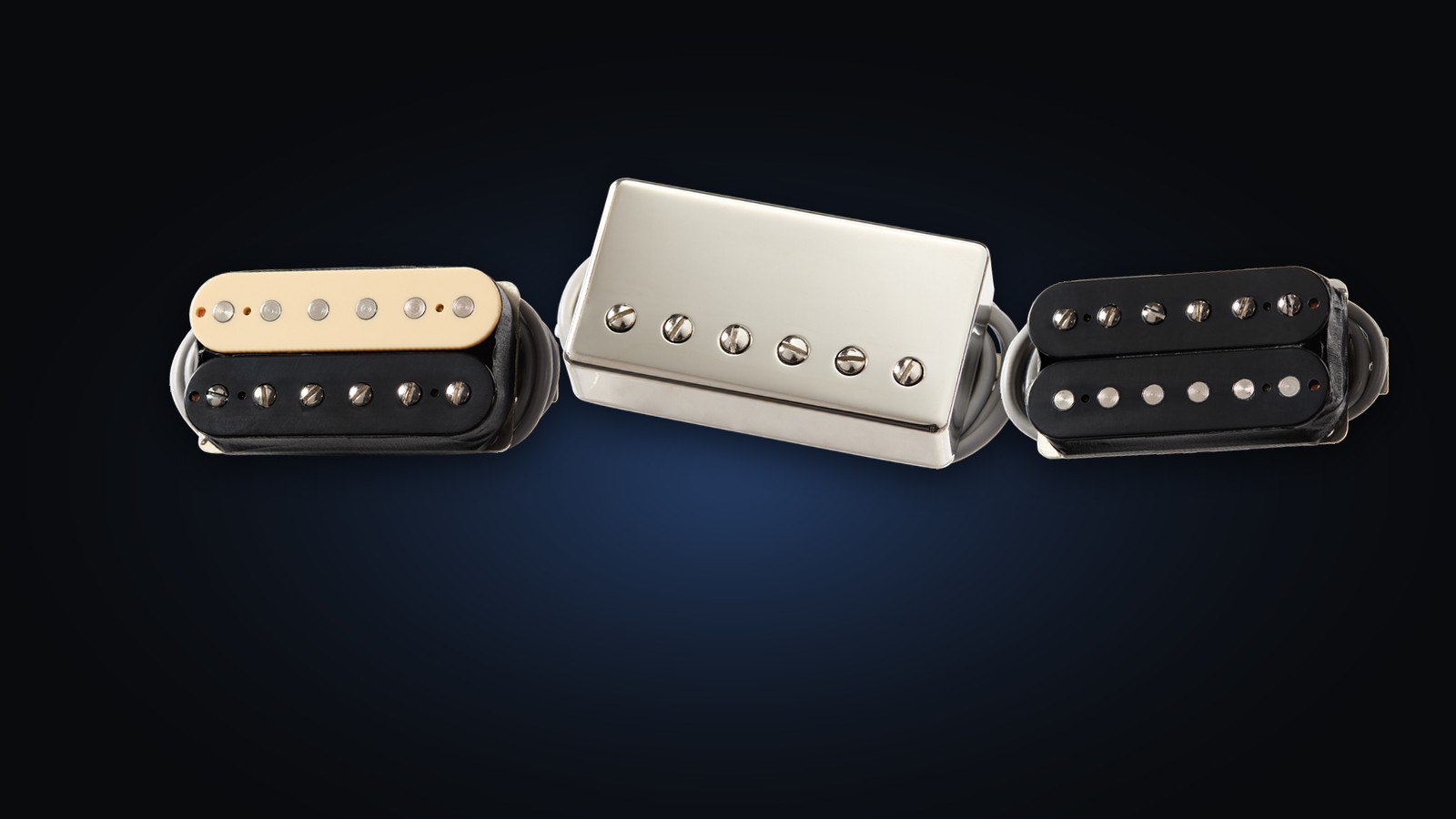
Gibson Breaks a 70-Year Habit: The ELEV8 Is Its First Alnico 8 Humbucker
For seventy years Gibson humbuckers have run on Alnico 2, 3, 4 and 5. The new ELEV8 series finally reaches for Alnico 8 — and it is aimed squarely at high-gain players.
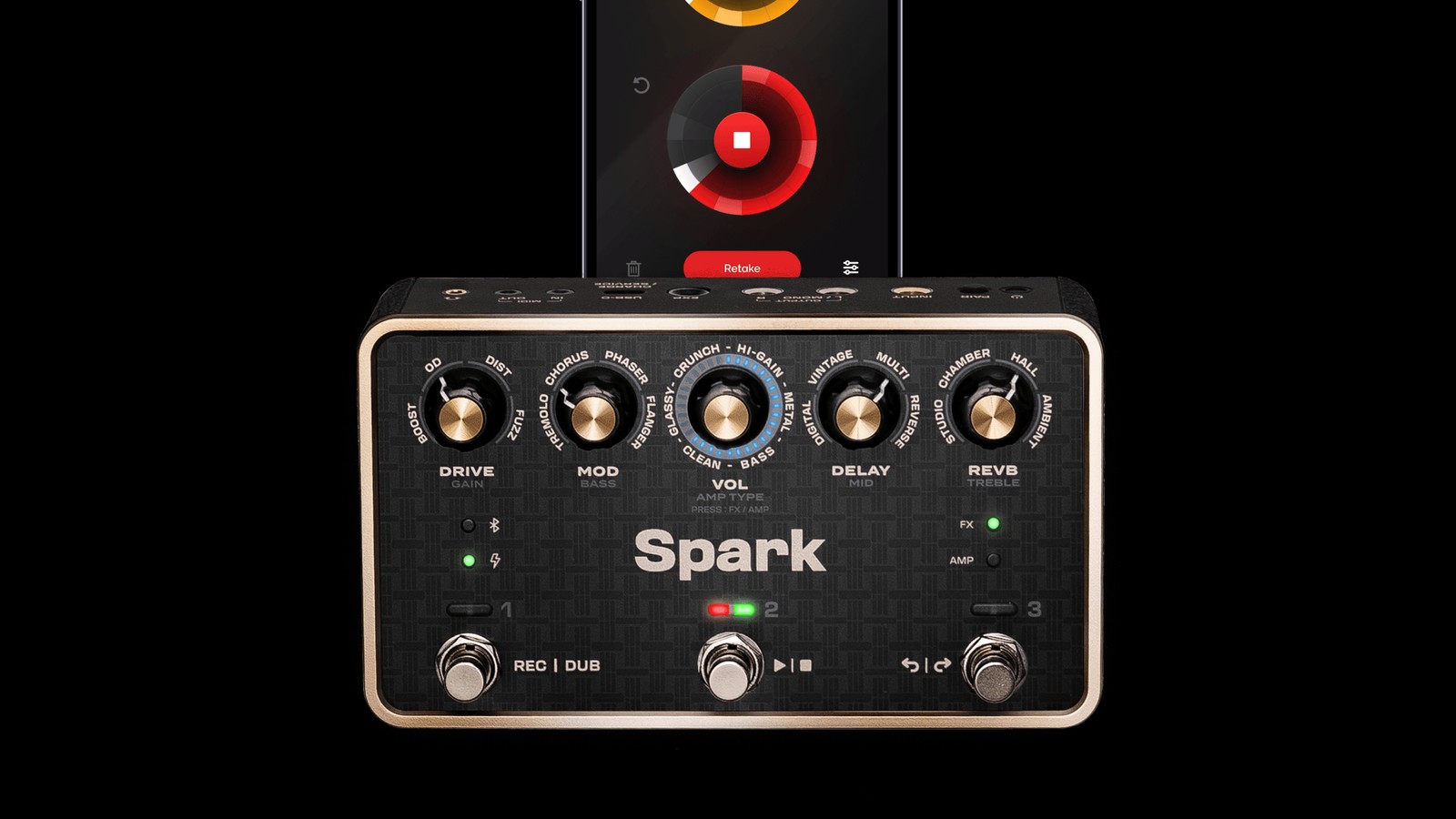
Positive Grid Spark PEDAL Puts a Full Guitar Rig at Your Feet for $199
Positive Grid has taken the Spark idea off the desk and put it on the floor: 33 amps, 43 effects, a 60-second looper, direct outs, USB-C recording and a seven-hour battery in a pedal that costs $199.
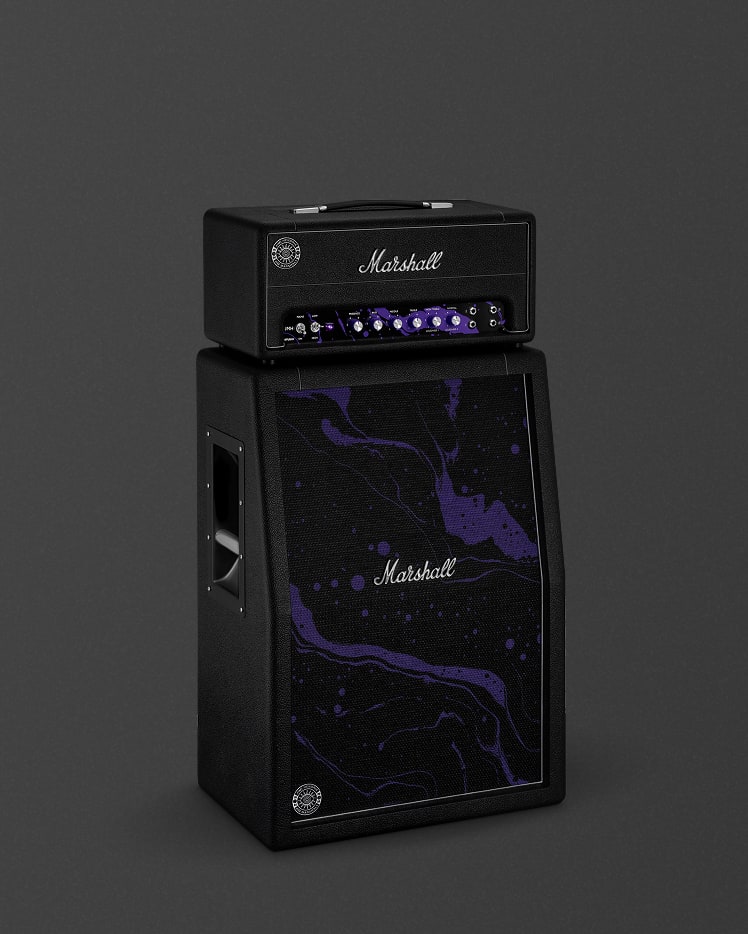
Marshall Brings Hendrix's Plexi Era Down to Earth With New 20-Watt JMH Studio Edition
Marshall's latest Hendrix anniversary release turns a 1969-inspired Super Lead into a UK-built, hand-wired 20-watt half-stack — complete with the cosmic purple visual treatment.