
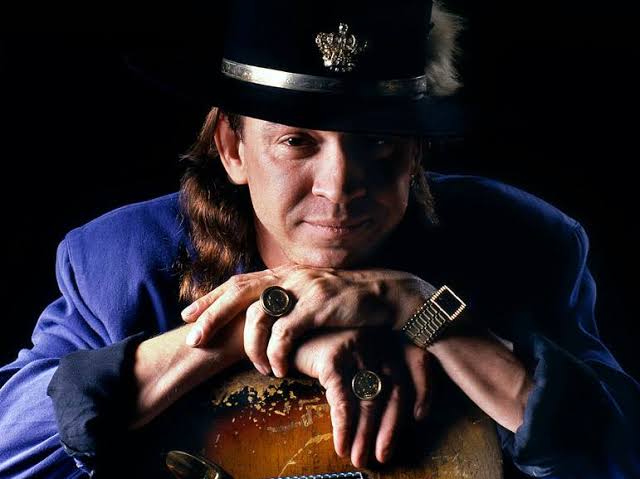
On This Day in 1990, Stevie Ray Vaughan Played His Final Concert
Hours before the helicopter crash that took his life at 35, Stevie Ray Vaughan played Alpine Valley with Double Trouble—and joined an unforgettable all-star finale.
Thirty-six years ago today, on a Sunday night in southeastern Wisconsin, Stevie Ray Vaughan walked off a stage for the last time. Nobody in the crowd of roughly 25,000 at Alpine Valley Music Theatre knew it. By every account, neither did he.
The show was the second of two weekend dates on a package tour headlined by Eric Clapton, with Stevie Ray Vaughan and Double Trouble, Buddy Guy, Robert Cray, and Jimmie Vaughan all on the bill. It was the kind of lineup blues fans dream about and almost never get. It turned out to be the last time anyone would ever see Stevie Ray Vaughan perform.
In the early hours of August 27, after the show, a helicopter carrying Vaughan and members of Clapton's crew crashed into a ski slope in dense fog shortly after takeoff, killing everyone on board. He was 35 years old, four years sober, and — by the testimony of nearly everyone around him — playing the best guitar of his life.
This is the story of that night.
The Final Set at Alpine Valley
By the summer of 1990, Stevie Ray Vaughan was in the middle of a genuine second act. The years of cocaine and alcohol that had nearly killed him in 1986 were behind him. In Step, released the previous summer, had been his most focused record — and its title was a deliberate nod to recovery. The tour with Joe Cocker that followed, and then the Clapton package dates, found him sharper, stronger, and more controlled than the hurricane-force player of the early '80s, without losing any of the fury.
That night at Alpine Valley, Double Trouble — drummer Chris Layton and bassist Tommy Shannon, with Reese Wynans on keyboards — delivered the set fans had come to expect: a relentless, physical brand of Texas blues built on Vaughan's heavy-gauge strings, battered Stratocasters, and an attack that could fill an amphitheater without a single wasted note. Accounts from the night describe a band in full command, loose and locked in at the same time.
Get Stevie Ray Vaughan’s “Texas Flood” Tone
Tell ToneMD what guitar and gear you own and we’ll show you how to get as close as possible using the equipment you already have — full signal chain, real numbered settings, no guesswork.
Included with The Guitar Plugged Premium
The surviving setlist reads like a greatest-hits reel: "The House Is Rockin'," "Tightrope," "Mary Had a Little Lamb," "Texas Flood," "Couldn't Stand the Weather," "Cold Shot," "Crossfire," and "Riviera Paradise" — the slow, shimmering instrumental from In Step that closed the proper set and, in retrospect, plays like a farewell.
An All-Star "Sweet Home Chicago" Finale
Then came the encore — the moment that sealed the night in blues history.
For the finale, Clapton brought the entire bill back to the stage for a closing jam on Robert Johnson's "Sweet Home Chicago." Clapton. Buddy Guy. Robert Cray. Jimmie Vaughan. And Stevie, trading verses and solos with his heroes and his peers in front of a roaring Wisconsin crowd.
Think about what that stage held: the man who had electrified the blues for a generation of white rock audiences, the Chicago titan who had taught them all what showmanship meant, the smoothest blues singer-guitarist of the MTV era, and two brothers from Oak Cliff, Texas who had grown up dreaming of exactly this. It was a cross-section of the entire electric blues tradition — Chicago, Texas, England — compressed into one song.
“He played like the whole thing was one long sentence he'd been waiting his entire life to finish.”
Stevie took his turn, the crowd erupted, and the night ended the way his whole career had been lived: shoulder to shoulder with the masters, holding absolutely nothing back. Nobody could have scripted a better final exit. That's the cruel, strange grace of it — his last performance was a celebration, surrounded by the music and the musicians he had spent his life honoring.
The Legacy Stevie Left Behind
The helicopter went down around 12:50 a.m., minutes after takeoff, bound for Chicago. The crash also claimed Clapton's agent Bobby Brooks, bodyguard Nigel Browne, tour manager Colin Smythe, and pilot Jeffrey Brown. Stevie was buried in Dallas beside his father.
What he left behind is still being measured. In seven years of major-label recording he made the blues commercially viable again, opened the door for a generation of players from Kenny Wayne Shepherd to John Mayer to Gary Clark Jr., and established a benchmark for electric guitar intensity that nobody has seriously challenged since. Our full Stevie Ray Vaughan guide traces the whole arc — from Oak Cliff clubs to the Austin years to global stardom — and his TGP Guitarist Index profile breaks down the techniques and gear that defined him.
But the number that matters most might be the smallest one: four. Four years of sobriety. The tragedy of August 26, 1990 isn't just that we lost a great guitarist. It's that we lost him at the exact moment he had finally become the person — and the player — he was always trying to be.
Build Stevie's Tone
Part of what keeps that final night alive is the sound itself — that massive, piano-string Texas tone that rang out over Alpine Valley and never really faded. If you've ever wanted to chase it, we've already done the deep forensic work: our Tone Decoded breakdown of Stevie Ray Vaughan's rig goes string gauge by string gauge, amp by amp, through the whole chain.
And if you want that sound translated to the gear actually sitting in your room, that's exactly what ToneMD was built for. Tell it your guitar, amp, and pedals and it will build you an SRV-inspired tone prescription — full signal chain, real numbered settings — based on what you already own.
Hear it. Chase it. Build it.
Enter the tone you want, tell ToneMD the gear and pickups you actually own, and get a recipe built for your rig — full signal chain, real numbered settings and step-by-step instructions for your exact amp or modeler.
Open ToneMDFree lookups every month · Unlimited with The Guitar Plugged Premium
Thirty-six years on, the tapes of that last "Sweet Home Chicago" still circulate, and they still raise goosebumps. Four legends, one stage, one song, and a Texas guitarist at the absolute peak of his powers. He couldn't have known it was the last time. He played it like he did.
Sources & further reading
Experience-driven coverage, not algorithm bait.
- 20+ years of guitar playing experience
- Real-world retail experience at Guitar Center
- Thousands of hours testing guitars, amps, and pedals
- A community of 50,000+ guitar enthusiasts across platforms
- Partnerships with Fender, DistroKid, TrueFire, Card Chords, and Enya
- Editorial standards published openly — see how we test gear
The Modern Guitar Magazine. Delivered to your inbox.
No spam. No gimmicks. Just great guitar content — stories, tones, iconic solos, and honest gear takes. Every week.
Ask GP
3 free questionsQuestions about On This Day in 1990,?
Get a straight answer from The Guitar Plugged's knowledge engine.
Discussion (0)
Sign in to join the discussion.
Sign in to commentLoading comments…
Discover another guitar story
Swipe through our latest features, breaking news and iconic solos — one story at a time.
Open Swipe →More in Guitar Talk
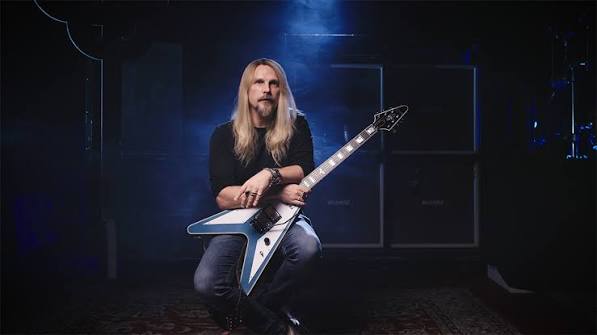
From Playing Hendrix for Coins to Judas Priest: Richie Faulkner Built His Entire Life Around Guitar
He learned Hendrix's "Wild Thing" as a kid, made his first money when a passer-by left 10 pence on the wall, and ended up standing in one of heavy metal's most scrutinised guitar positions. The interesting question isn't how Richie Faulkner joined Judas Priest — it's how he did it without becoming an impersonation.
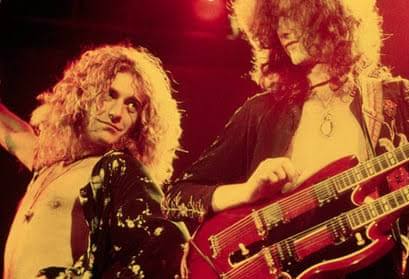
Robert Plant at 78: Why His Chemistry With Jimmy Page Was Led Zeppelin's Real Secret Weapon
Robert Plant turns 78 today. The conventional story says Page played guitar and Plant sang. The truth is stranger and more useful: they behaved like two lead instruments arguing, answering and leaving each other room.
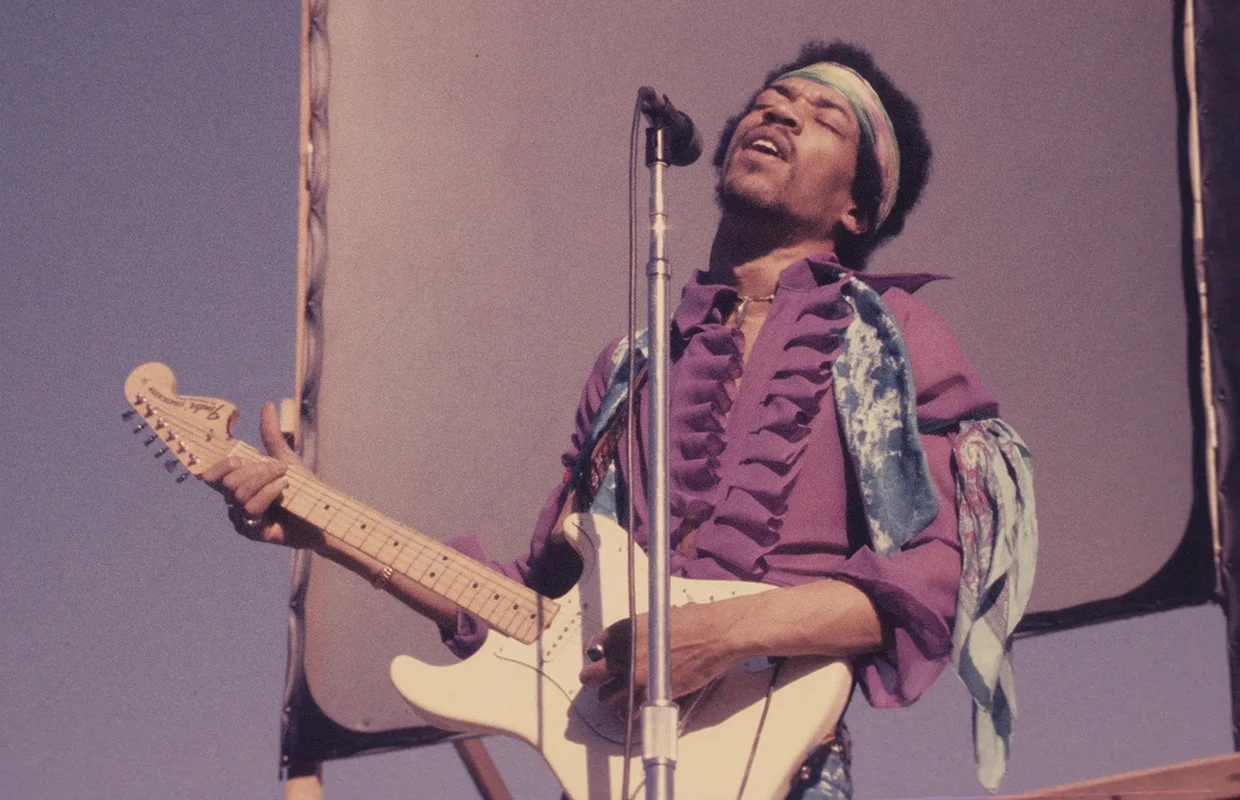
History of the Riff: Jimi Hendrix's "Foxey Lady" — The Sound That Made the Electric Guitar Dangerous
Feedback before the riff, four Marshall cabinets, a microphone eight feet away and a Stratocaster flipped upside down — the full story of the riff that made the electric guitar sound dangerous.