
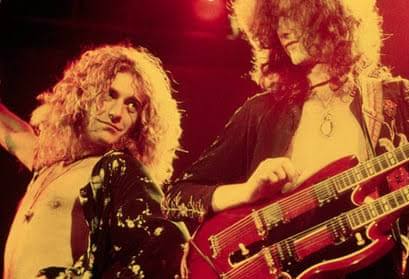
Robert Plant at 78: Why His Chemistry With Jimmy Page Was Led Zeppelin's Real Secret Weapon
Robert Plant turns 78 today. The conventional story says Page played guitar and Plant sang. The truth is stranger and more useful: they behaved like two lead instruments arguing, answering and leaving each other room.
Robert Plant turns 78 today, born on August 20, 1948 in West Bromwich, and the internet will spend the day repeating the same sentence: Jimmy Page played guitar, Robert Plant sang.
That sentence is true and almost useless.
If you listen to Led Zeppelin as a guitarist — not as a fan, not as a historian, but as somebody trying to work out why four musicians sounded like eight — the more interesting description is this: Page and Plant frequently behave like two improvising lead instruments in the same room, reacting to one another in real time.
That is the actual secret weapon. Not the volume. Not the Les Paul. Not the mythology. The conversation.
The Band Was Built Around a Conversation
The origin story matters here because of what Page was looking for. In 1968, with manager Peter Grant, he was trying to carry the Yardbirds forward and needed a singer. He found Plant in the Midlands. Plant brought John Bonham, a drummer he had already worked with in Band of Joy. John Paul Jones — a working session musician and arranger — completed it.
What Page assembled was not a backing band. It was three other players capable of initiating musical ideas, not just executing them. That distinction shows up in the recordings immediately.
Listen to "Communication Breakdown" or the early blues covers on the first album and you can hear a group that treats the arrangement as an argument. Somebody says something. Somebody answers. Nobody speaks over anybody for long.
When the Vocal Becomes Another Guitar
Plant's phrasing is often described as "powerful," which is lazy. What is actually happening is that Plant sings with a blues instrumentalist's vocabulary.
Consider the tools he uses constantly:
• Scooping and sliding into pitches rather than landing squarely on them
• Approaching a note from below and letting it settle, the vocal equivalent of a bend
• Placing phrases behind the beat, then snapping ahead of it
• Extreme dynamic range — a near-whisper and a full-throated shout in the same verse
• Short improvised answers in the gaps, not just written melody
Every one of those is something a lead guitarist does. A bend, a slide, rhythmic displacement, dynamics, improvisation. That's why Plant so often sounds like a second lead line rather than a vocalist sitting on top of a chord bed.
A caution worth stating plainly: singers do not literally bend strings. Pitch inflection in the voice comes from breath support and laryngeal control, not from mechanically pulling a note sideways. But musically, the effect on the listener is analogous — a pitch that arrives in motion rather than arriving fixed. That motion is what makes a vocal feel like an instrument in conversation.
The blues records Plant absorbed as a teenager taught him something else that a lot of rock singers never learn: leave gaps. A blues vocal phrase is short, and the space after it is where the guitar answers. Plant built that expectation into Led Zeppelin from the first album, and Page spent a decade filling those gaps intelligently.
Why Page Left So Much Space
Here is the part that most guitarists skip.
Jimmy Page is celebrated for what he played. His greatest accompaniment decisions are frequently decisions not to play.
Take "Whole Lotta Love." The riff is one of the most recognisable figures in rock, and Page repeats it almost stubbornly. He does not develop it into something more sophisticated behind the verses. He states it, stops, and lets Plant occupy the space — and then the guitar answers, sometimes with nothing more than a slide or a single accent.
Repetition is not laziness. Repetition creates a fixed frame that the singer can push against. If the guitar part changed every bar, Plant's improvisation would have nothing to be improvisational against.
The techniques Page uses to create space are unglamorous and completely learnable:
• Riff repetition — the guitar figure becomes furniture, not commentary
• Strategic rests — whole beats where the guitar simply stops
• Sustained chords instead of busy strumming under a vocal line
• Rhythmic simplicity in verses, saving complexity for instrumental sections
• Genuine dynamic range — quiet playing, not just quieter distortion
Get Jimmy Page’s “Since I've Been Loving You” Tone
Tell ToneMD what guitar and gear you own and we’ll show you how to get as close as possible using the equipment you already have — full signal chain, real numbered settings, no guesswork.
Included with The Guitar Plugged Premium
There's a further point about arrangement. Zeppelin routinely thins out. Sections drop to voice and drums, or voice and a single sustained chord, or acoustic guitar alone. Because the band is willing to remove instruments, the moments when everything returns feel enormous. That is contrast doing the work that volume usually gets credit for.
"Since I've Been Loving You": A Four-Way Conversation
If you want one recording that proves the thesis, it's the slow blues on Led Zeppelin III.
"Since I've Been Loving You" was captured with the band playing together, and it sounds like it. You can hear the performance breathing — including the famously audible squeak of Bonham's bass drum pedal, a blemish the band never scrubbed out. That detail is a useful reminder: this is a live take between four musicians, not a stack of isolated overdubs.
Follow what happens across the track. Plant delivers a phrase. Page answers it. Not with a scale run, but with something shaped like a reply — similar length, similar contour, often pitched to complete the emotional idea rather than start a new one. Then Plant escalates, and Page escalates with him, matching intensity rather than out-noting him.
Underneath, John Paul Jones is not simply holding down roots. His organ and bass pedal work supplies the harmonic floor that lets Page play sparsely without the arrangement thinning out. And Bonham is doing the most underrated job in the band: he keeps the tempo elastic. The song surges and pulls back with the vocal.
When Page's solo finally arrives, it does not feel disconnected from the vocal arrangement because it isn't. He has spent three minutes learning the phrasing of the singer he's about to replace. The solo behaves like the next verse — the same conversational units, the same tendency to say something and then stop.
That is the difference between a solo and a section of soloing. A solo continues the argument.
For a note-level look at that lead break, we went deeper in our breakdown of the "Since I've Been Loving You" solo.
"Black Dog": Call-and-Response Made Structural
"Black Dog" takes the same idea and makes it architectural.
The riff came from John Paul Jones, who has said he wrote it on the way home from a rehearsal; the song is credited to Jones, Page and Plant, and the title refers to a black Labrador that wandered the grounds at Headley Grange during the sessions. Jones has also said the figure was originally conceived in a far more awkward metre and had to be simplified so the band could actually play it.
What matters musically is the structure. Plant sings unaccompanied. The band answers. Plant sings again. The band answers again. There is no overlap in the verses at all.
That is not a production trick. It is call-and-response taken to its logical extreme — a decision to physically separate the vocal and the instrumental statement so that neither ever competes for the same space. It also does something sneaky: because the riff is rhythmically disorienting, the naked vocal sections give the listener a stable reference point before the floor tilts again.
“Page's greatest accompaniment decisions are frequently decisions not to play.”
There are only a handful of rock songs where the arrangement itself is the hook. This is one of them, and the hook is the gap.
Where the Conversation Changes Shape
The Page/Plant dialogue is not one trick repeated for twelve years. It mutates.
On "Kashmir" there is barely any call-and-response at all. The guitar and orchestration are a fixed, hypnotic cycle, and Plant sings across the top of it rather than inside it. The tension comes from the vocal refusing to line up neatly with the riff's rotation.
On the acoustic material — "Going to California" and the folk-leaning parts of the third album — the pair drop the volume entirely and the conversation becomes intimate. Page's fingerpicking leaves enormous amounts of air, and Plant sings quietly enough that the guitar never has to duck out of the way.
And on the long live versions of "Dazed and Confused," the conversation becomes genuinely improvised for extended stretches, with Plant echoing guitar figures and Page echoing vocal lines back. That mirroring — the singer imitating the guitar, the guitar imitating the singer — is the clearest possible evidence that both players were listening to each other as instrumentalists.
It's worth noting the blues debts here honestly, because Zeppelin's relationship with its sources was not always clean. "Whole Lotta Love" ultimately saw Willie Dixon credited, and "The Lemon Song" saw Chester Burnett — Howlin' Wolf — credited, in both cases after legal action. The call-and-response vocabulary the band used so brilliantly was borrowed from a tradition that took a long time to be properly acknowledged.
Five Page-and-Plant Lessons for Guitarists Who Play With Singers
This is the practical part. None of it requires a vintage Les Paul.
1. Leave physical space in the arrangement
Not "play quieter." Stop playing. Identify the two or three beats after each vocal phrase and take your hands off the strings. Most amateur rhythm guitar is a continuous carpet, and a continuous carpet gives a singer nothing to stand on. Record a rehearsal, then count how many bars you played nothing. If the answer is zero, that's the problem.
2. Answer the vocal instead of competing with it
When you do fill a gap, make it a reply. Match the length of the singer's phrase. Start roughly where they finished, pitch-wise. Resist the urge to demonstrate anything. An answer that's shorter than the question almost always sounds better than one that's longer.
3. Match intensity, not note count
When a singer pushes, the instinct is to add notes. Page usually adds weight instead — a heavier attack, a wider bend, a longer sustained note, more of the amp. Intensity is a function of commitment, not density. A single bent note held over a rising vocal will beat a run every time.
4. Build dynamics with the singer, not at them
Agree in advance where the song gets quiet. Then actually get quiet — pick softer, roll the guitar volume back, move to the neck pickup, drop to partial chords. If the loudest and quietest parts of your set are three decibels apart, the arrangement has no shape and the vocalist has to supply all of it alone.
5. Treat phrasing as conversation
Learn the singer's melody the way you'd learn another guitarist's solo. Know where they breathe. Know which words they land hard on. Then place your part around those events instead of on top of them. Page knew Plant's phrasing intimately, which is precisely why he knew when to disappear.
A Note on Gear — and What It Doesn't Explain
This is not a rig article, but a few details are relevant to the recordings above, and they belong to specific eras.
Page used a Telecaster for much of the first album's electric work. From 1969 onward, a 1959 Les Paul Standard acquired from Joe Walsh became his main electric guitar, and it's the voice behind a great deal of the second, third and fourth albums. Amplification changed over time too, moving toward the loud British amp sound most people associate with the band. Acoustic material used entirely different instruments again.
The point of listing that is mostly to warn against the opposite habit: assembling a fictional single "Zeppelin rig" out of parts from different years. There wasn't one. Page changed guitars, amps, tunings and recording approaches constantly, and specific settings for specific sessions are not reliably documented — anyone quoting you exact knob positions from 1970 is guessing.
More importantly, none of it explains the thing this article is about. The gear does not decide when to stop playing.
Using ToneMD for a Page-Flavoured Tone
If reading this makes you want to sit in that tonal neighbourhood, the useful move is not to buy anything. It's to work out what your existing rig can already do.
That's what ToneMD is for. You tell it the guitar, pickups and amp, modeler or plugin you actually own, and it builds a prescription around that gear rather than handing you a generic settings chart. For this kind of material, the characteristics worth chasing are midrange presence, moderate rather than modern gain, and enough dynamic response that rolling your guitar volume back genuinely cleans things up.
To be clear about what that is and isn't: it will not recreate Jimmy Page's studio sound, and it certainly won't recreate his playing. Those recordings involved specific rooms, specific microphones, a producer's judgement and a set of hands nobody else has. What a prescription can do is get your rig into a responsive, mid-forward place where restraint and dynamics start to pay off — which is the actual prerequisite for playing like this.
What Plant Gave Page
Strip away the mythology and the answer to the article's question is fairly simple.
Robert Plant gave Jimmy Page another musician to react to. Not a melody to accompany — a musician. Somebody who improvised, who phrased like an instrumentalist, who left gaps and expected them to be filled, and who was capable of raising the stakes mid-take and forcing the guitarist to follow.
And Page understood the corresponding responsibility, which is the harder half: great guitar accompaniment is largely defined by what the guitarist chooses not to play.
Seventy-eight years after his birth in West Bromwich, that remains the most useful thing a guitar player can take from Robert Plant — even though he never played the guitar parts.
If you want more from the same corner of the catalogue, start with "Whole Lotta Love", then "Stairway to Heaven", and then read where Page lands on our 25 greatest guitarists of all time.
Related Listening & Reading
Some links may be affiliate links. We may earn a small commission at no cost to you.
Sources & further reading
Experience-driven coverage, not algorithm bait.
- 20+ years of guitar playing experience
- Real-world retail experience at Guitar Center
- Thousands of hours testing guitars, amps, and pedals
- A community of 50,000+ guitar enthusiasts across platforms
- Partnerships with Fender, DistroKid, TrueFire, Card Chords, and Enya
- Editorial standards published openly — see how we test gear
The Modern Guitar Magazine. Delivered to your inbox.
No spam. No gimmicks. Just great guitar content — stories, tones, iconic solos, and honest gear takes. Every week.
Ask GP
3 free questionsQuestions about Robert Plant at 78?
Get a straight answer from The Guitar Plugged's knowledge engine.
Discussion (0)
Sign in to join the discussion.
Sign in to commentLoading comments…
Discover another guitar story
Swipe through our latest features, breaking news and iconic solos — one story at a time.
Open Swipe →More in Guitar Talk
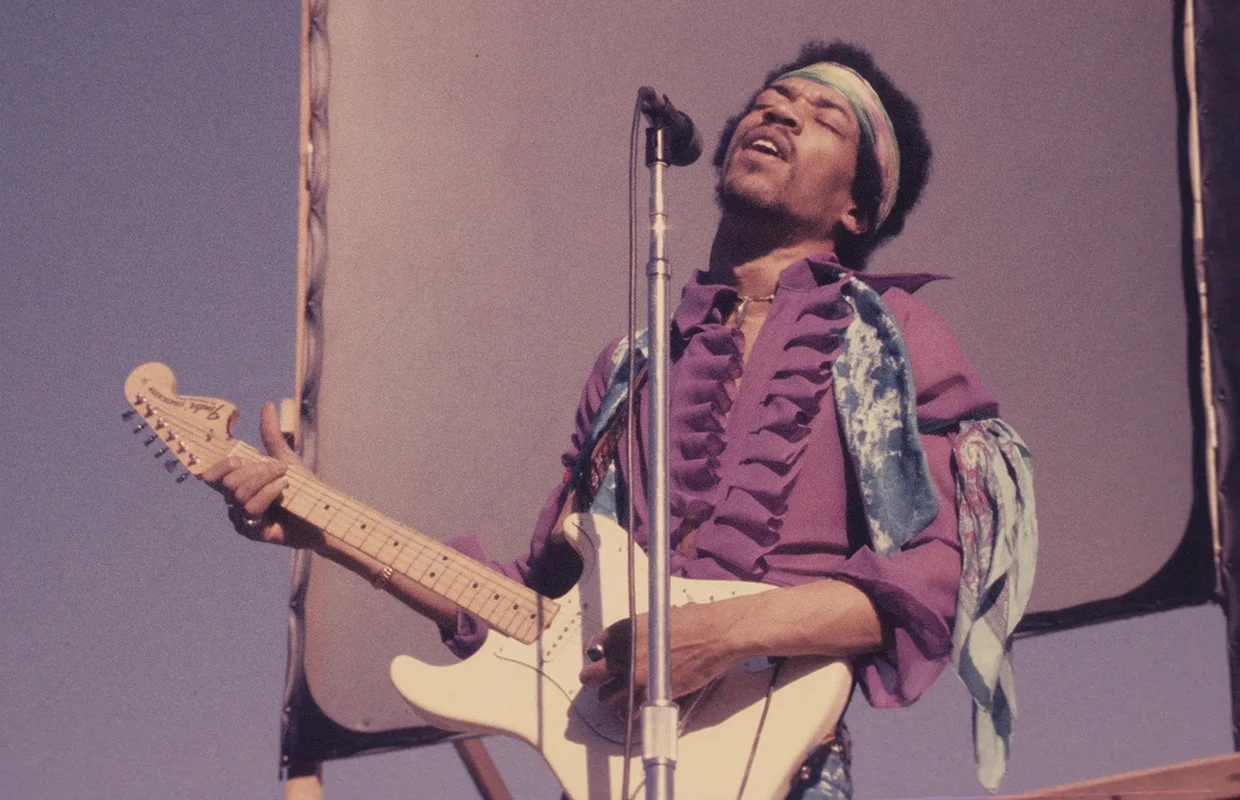
History of the Riff: Jimi Hendrix's "Foxey Lady" — The Sound That Made the Electric Guitar Dangerous
Feedback before the riff, four Marshall cabinets, a microphone eight feet away and a Stratocaster flipped upside down — the full story of the riff that made the electric guitar sound dangerous.

History of the Riff: How Prince Turned "Purple Rain" Into Guitar Immortality
A song born onstage, a guitar part that barely needs distortion, and a solo built on emotion instead of excess — the full story of "Purple Rain" and its immortal guitar moment.
The Devil Went Down to the Crossroads: Inside Steve Vai's Legendary Guitar Duel
There are guitar scenes in movies. And then there is Crossroads. Forty years on, the final duel remains part movie sequence, part guitar lesson, part urban legend — and the truth behind it is stranger than the film ever let on.