The History of the Riff: How Thin Lizzy Made "The Boys Are Back in Town" Sound Like a Victory Lap
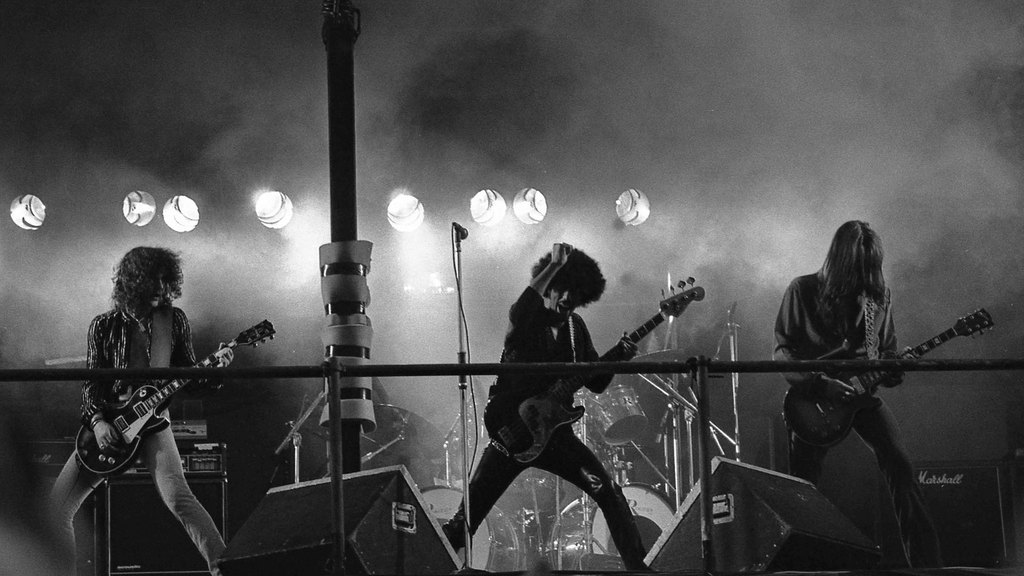
Thin Lizzy performing during the Live and Dangerous era, 1978. Photo: Chris Hakkens, via Wikimedia Commons (CC BY-SA 2.0).
Two guitarists, one deceptively simple progression, and a chorus built to make every barroom in the world feel like home.
There are riffs that announce themselves with technical force, and then there are riffs that win by pure personality.
Thin Lizzy's "The Boys Are Back in Town" belongs to the second category. It does not need speed, sweep picking, or a wall of effects to make its point. Within seconds, the song creates a scene: a gang coming through the door, a little trouble in the air, and the kind of Friday-night electricity that makes even a quiet room feel louder.
Released on Thin Lizzy's 1976 album Jailbreak, "The Boys Are Back in Town" became the band's defining international hit. It reached No. 8 in the United Kingdom and broke Thin Lizzy wide open in the United States, where it became an FM-radio staple and helped turn Phil Lynott, Scott Gorham, Brian Robertson, and drummer Brian Downey into rock-and-roll fixtures.
But the song's legacy is not just about its chart performance. Guitarists still chase it because it captures something much harder to manufacture than a famous tone: chemistry. The riff is lean, melodic, and perfectly placed. The guitar arrangement feels massive without being crowded. And the signature harmony leads — played by Gorham and Robertson — helped establish a sound that would echo through the next generation of hard rock and heavy metal.
A Song That Almost Didn't Get Its Moment
"The Boys Are Back in Town" was written by Thin Lizzy bassist and frontman Phil Lynott, whose songwriting had always lived at the intersection of rock muscle, soulful melody, Irish storytelling, and street-level character sketches. Lynott did not write like a guitarist showing off a new lick. He wrote like a filmmaker dropping you into the middle of a scene.
That is exactly what happens here. The lyrics do not spend time explaining every character or every detail. They give you snapshots: Dino, Johnny, the old haunt, the girls who know what is coming. It is a reunion song, but not a sentimental one. These are not clean-cut hometown heroes returning from a victory parade. These are the guys who bring stories, bruises, noise, and probably a little chaos.
The song was recorded during the Jailbreak sessions at Ramport Studios in London, with John Alcock producing. At the time, Thin Lizzy had already earned respect as a powerful live band, but they were still looking for the song that could turn their reputation into a true breakthrough. Jailbreak had plenty of sharp material — including the title track and "Cowboy Song" — but "The Boys Are Back in Town" was the track that had the widest open door.
Its famous rise was not inevitable. The song was reportedly not viewed as the obvious centerpiece by everyone around the band at first. But once radio got hold of it, the combination of Lynott's vocal, the chorus, and those unmistakable guitars proved impossible to ignore. The song did not sound like a compromise between hard rock and pop. It sounded like Thin Lizzy doing Thin Lizzy — just with a chorus big enough for the whole world to sing.
The Guitar Partnership That Made It Work
The heart of the song is the dual-guitar partnership of Scott Gorham and Brian Robertson.
Thin Lizzy did not invent the idea of two guitarists playing together, but they made it feel fresh, athletic, and emotionally direct. Their approach was different from simply doubling every riff for extra volume. Gorham and Robertson treated the two guitars like distinct voices in a conversation. One could provide the anchor while the other added color; one could state the melody while the other supplied the harmony; both could lock together for a line that suddenly felt larger than either player alone.
That relationship is all over "The Boys Are Back in Town."
Want Thin Lizzy’s Tone?
Tell ToneMD what guitar and gear you own and we’ll show you how to get as close as possible using the equipment you already have — full signal chain, real numbered settings, no guesswork.
Included with The Guitar Plugged Premium
The main riff is built around a tight, punchy chord movement with a signature descending feel. It does not overwhelm the vocal or insist on being the song's only hook. Instead, it acts like the opening shot of a movie. The riff gives the song its posture: confident, a little loose, and ready to move.
Then come the harmony parts — the detail that turns a great rock song into a guitar-player landmark.
Thin Lizzy's harmonized leads had a very different flavor from the ornate, heavily classical approach that would later define some metal guitar duos. Gorham and Robertson's parts were melodic but never overly precious. They had blues in them. They had swagger. Most importantly, they sounded like two players reacting to the same song in real time rather than one guitarist copied onto a second track.
That sound would influence countless players and bands, from Iron Maiden to Judas Priest to the entire hard-rock and melodic-metal world that followed. You can hear Thin Lizzy's DNA in nearly every band that understands that harmony guitar lines can be as memorable as a vocal chorus.
Why the Main Riff Feels So Good
On paper, the riff is not trying to impress anyone with complexity. That is part of the genius.
• It establishes the song's forward motion
• It leaves room for Phil Lynott's vocal storytelling
• It gives the rhythm section a shape to push against
Brian Downey's drumming is especially important here. He does not bash through the arrangement like the song is a straight-ahead bar band rocker. There is feel in the groove — space, restraint, and timing that lets the guitars breathe. Lynott's bass locks the bottom together while still moving with the kind of melodic confidence that made him one of rock's most distinctive bass-playing frontmen.
The guitars sit above all of it with a tone that is crunchy but not overly saturated. That distinction matters. Modern players often reach for too much gain when trying to recreate classic-rock riffs. "The Boys Are Back in Town" needs bite, definition, and enough midrange to cut through a full band. If the tone gets too compressed or too high-gain, the riff loses the sharp edges that make it feel alive.
“The riff does not overwhelm the vocal or insist on being the song's only hook. It acts like the opening shot of a movie.”
The song is a masterclass in a truth that gets forgotten when players obsess over gear: attitude is part of the arrangement. The notes are only half the story. The way the chord stabs land, the way the guitars pull back before the chorus, and the way the harmony lines arrive at exactly the right moment are what make the whole thing hit.
The Lead Work: Melodic, Not Mechanical
For many guitarists, "The Boys Are Back in Town" is their first real introduction to Thin Lizzy's lead-guitar language.
The solo is not a technical stunt. It is a melodic statement that carries the song forward. The phrasing has a vocal quality, which is one of the reasons it still sounds good decades later. There is enough grit and bluesy edge to remind you that these players came from hard rock, but the line also has a tunefulness that makes it feel written — not merely improvised over the chord changes.
That balance was central to Thin Lizzy's best work. The band understood that guitar solos should heighten the drama of a song. They should not stop it cold.
Gorham and Robertson could both play with fire, but their best moments came from knowing when to serve the melody. Here, the guitar work never sounds like it is competing with Lynott. It sounds like it is extending the story.
That is why the song remains such a rewarding one to learn. You can play every note correctly and still miss the feel. The real challenge is getting the phrasing to sound conversational instead of stiff. Let the notes breathe. Do not rush the bends. Let the rhythm guitar stay tight. And when the harmony parts arrive, make them sound like a celebration rather than an exercise.
The Gear DNA Behind the Tone
Thin Lizzy's mid-'70s sound was not built around a single magic pedal or one impossible-to-find amp setting. It was built around Gibson-style humbucker guitars, loud British amplification, controlled gain, and the distinct touch of two players with different personalities.
Brian Robertson was closely associated with Gibson Les Pauls, while Scott Gorham also became known for his Les Paul work. That guitar pairing makes immediate sense when you listen to the record. The humbuckers provide body and sustain, while the British-voiced amp character gives the chords their bark and the lead lines their bite.
• A Les Paul-style guitar with medium-output humbuckers
• A Marshall-style or British-voiced amp model
• Moderate gain — not modern high gain
• Strong mids and tight bass
• A little room reverb, if any
• Bridge pickup for the rhythm bite; neck or middle position for smoother lead moments
The key is clarity. You want the chord attacks to feel authoritative, but you also need each note in the harmony lines to remain distinct. If your amp is too dark, the song becomes muddy. If it is too bright, the riff turns brittle. Think punchy, vocal, and slightly raw.
Hear it. Chase it. Build it.
Enter the tone you want, tell ToneMD the gear and pickups you actually own, and get a recipe built for your rig — full signal chain, real numbered settings and step-by-step instructions for your exact amp or modeler.
Open ToneMDFree lookups every month · Unlimited with The Guitar Plugged Premium
Why the Riff Still Matters
"The Boys Are Back in Town" has survived because it does not rely on nostalgia alone. The production may place it firmly in the mid-1970s, but the writing still works in any era. The riff still struts. The chorus still explodes. The guitars still sound like they are having fun.
That last part is important.
A lot of classic rock gets remembered for being loud, rebellious, or technically impressive. Thin Lizzy was all of those things at times, but this song endures because it feels communal. It is not a song about one isolated guitar hero standing under a spotlight. It is about a band, a crew, a room, and the thrill of everybody arriving at once.
The riff is the invitation.
And nearly 50 years later, guitarists are still answering it.
Gear to Explore
Some links may be affiliate links. We may earn a small commission at no cost to you.
Sources & further reading
- 1.Thin Lizzy — Jailbreak (Vertigo/Mercury, 1976)
- 2.Thin Lizzy — Live and Dangerous (Vertigo, 1978)
Experience-driven coverage, not algorithm bait.
- 20+ years of guitar playing experience
- Real-world retail experience at Guitar Center
- Thousands of hours testing guitars, amps, and pedals
- A community of 50,000+ guitar enthusiasts across platforms
- Partnerships with Fender, DistroKid, TrueFire, Card Chords, and Enya
- Editorial standards published openly — see how we test gear
The Modern Guitar Magazine. Delivered to your inbox.
No spam. No gimmicks. Just great guitar content — stories, tones, iconic solos, and honest gear takes. Every week.
Ask GP
3 free questionsQuestions about The History of the Riff?
Get a straight answer from The Guitar Plugged's knowledge engine.
Discussion (0)
Sign in to join the discussion.
Sign in to commentLoading comments…
Discover another guitar story
Swipe through our latest features, breaking news and iconic solos — one story at a time.
Open Swipe →More in Guitar Talk
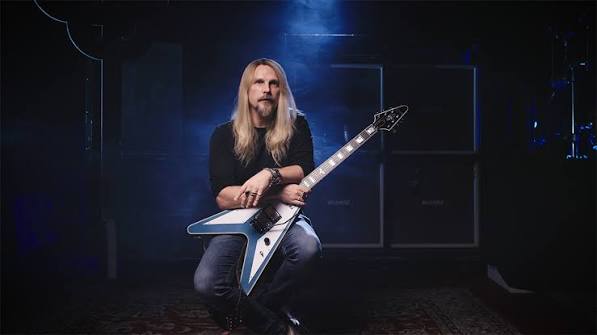
From Playing Hendrix for Coins to Judas Priest: Richie Faulkner Built His Entire Life Around Guitar
He learned Hendrix's "Wild Thing" as a kid, made his first money when a passer-by left 10 pence on the wall, and ended up standing in one of heavy metal's most scrutinised guitar positions. The interesting question isn't how Richie Faulkner joined Judas Priest — it's how he did it without becoming an impersonation.
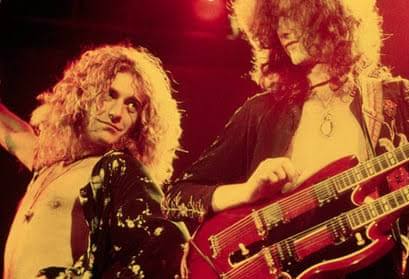
Robert Plant at 78: Why His Chemistry With Jimmy Page Was Led Zeppelin's Real Secret Weapon
Robert Plant turns 78 today. The conventional story says Page played guitar and Plant sang. The truth is stranger and more useful: they behaved like two lead instruments arguing, answering and leaving each other room.
History of the Riff: Jimi Hendrix's "Foxey Lady" — The Sound That Made the Electric Guitar Dangerous
Feedback before the riff, four Marshall cabinets, a microphone eight feet away and a Stratocaster flipped upside down — the full story of the riff that made the electric guitar sound dangerous.