Tony MacAlpine at 66: The Shred Guitarist Who Never Had to Choose Between Metal and Classical Music
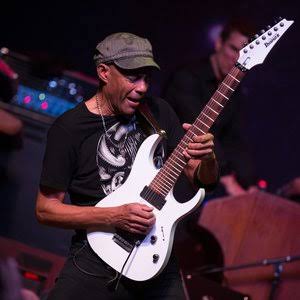
Tony MacAlpine performing live, playing a white electric guitar and wearing a camouflage cap and black T-shirt on a dark stage.
Tony MacAlpine started on piano at five and studied classical piano and violin before the electric guitar made him famous. That order matters — it explains everything about how he writes, phrases, and thinks on the fretboard.
Tony MacAlpine was born on August 29, 1960, in Springfield, Massachusetts, which makes today his 66th birthday. That is the hook. It is not the story.
The story is what happens when a shred guitarist thinks like a classically trained pianist — because MacAlpine is one of the very few players in the instrumental-rock canon for whom classical training was not a decorative influence bolted onto an existing rock vocabulary. He started piano at five and guitar at twelve. He studied classical piano and violin at the Springfield Conservatory of Music and continued in music programs at the University of Hartford. By the time the electric guitar became the instrument the world knew him for, he already had years of formal harmonic and keyboard literature behind him.
MacAlpine did not add classical music to rock guitar. He arrived at rock guitar already thinking like a classical musician, and the guitar had to catch up.
That ordering explains almost everything unusual about his records: the density of the harmony, the way melodies actually develop instead of repeating, the Chopin études that appear on album after album, and the fact that he was hired to play keyboards on other guitarists' shred records before most listeners had heard his own.
The Short Version of a Long Career
MacAlpine's first solo album, Edge of Insanity, arrived in 1986 on Shrapnel Records with Steve Smith on drums and Billy Sheehan on bass. Maximum Security followed in 1987. In the same window he played keyboards on Vinnie Moore's Mind's Eye (1986) and Joey Tafolla's Out of the Sun (1987), and played guitar in M.A.R.S. — MacAlpine, Tommy Aldridge, Rob Rock, Rudy Sarzo — whose Project: Driver was released in 1986.
The 1990s brought a commercially oriented detour with the band-format Eyes of the World (1990), then a return to instrumental writing across Freedom to Fly (1992), Madness (1993), Premonition (1994), Evolution (1995), Violent Machine (1996) and Master of Paradise (1999). Chromaticity landed in 2001, after which he stepped back from solo records for roughly a decade.
That decade was busy anyway. He was the guitarist in the progressive-metal trio Planet X alongside keyboardist Derek Sherinian and drummer Virgil Donati, appearing on Universe (2000), Live from Oz (2002) and MoonBabies (2002), and rejoining for live dates in 2009. He worked in CAB and Ring of Fire. From 2001 to 2005 he played both guitar and keyboards in Steve Vai's touring band, The Breed. His self-titled eleventh album came out in June 2011 on Vai's Favored Nations label, and Concrete Gardens followed in April 2015.
That is the map. The interesting part is what is happening inside the music.
Why *Maximum Security* Still Matters
The instrumental-guitar boom of the late 1980s produced a great deal of very fast music and a much smaller amount of music that still rewards close listening in 2026. Maximum Security (1987) belongs to the second group, and the reasons are compositional rather than athletic.
Composition. These are pieces, not solo vehicles with a chord loop underneath. Sections arrive in a considered order, themes come back altered rather than repeated verbatim, and the keyboard and guitar parts are written to fit each other rather than to trade turns. Because MacAlpine was writing at a keyboard as well as a fretboard, the arrangements think in full harmonic textures — inner voices, sustained pads, counterlines — instead of the guitar-plus-power-chords default of the era.
Harmonic vocabulary. The record leans on harmonic-minor and diminished colour, borrowed chords, and modal shifts that move further from the tonic than most shred records of the period dared. Crucially, the harmony is not just a backdrop for scale choices. Chord changes generate the melodies rather than merely tolerating them.
Melodic development. This is where MacAlpine separates himself. A theme is introduced, then re-harmonised, transposed, rhythmically displaced, ornamented, or handed to a different register. That is a composer's habit — the classical development of an idea — applied to an electric guitar record.
Technique. The playing is formidable: sweep-picked arpeggios, wide-interval legato, alternate-picked sequences, and the sweep-tapping approach he became known for, where tapped notes extend a swept arpeggio far beyond a comfortable hand span. Note the function, though. The extended range of those figures maps directly onto keyboard-style arpeggiation, where a pianist can cover two or three octaves in a single gesture.
Neoclassical influence. Chopin appears literally on MacAlpine records in the form of étude interpretations, and structurally everywhere else: étude-like figuration, ornamented cadences, and a preference for melodic lines that resolve with intent rather than fading out on a bend.
Fusion influence. Underneath the neoclassical surface there is jazz-fusion thinking — chromatic approach tones, superimposed harmony, and rhythmic phrasing that pushes against the barline rather than sitting square inside it.
Rhythm guitar. Easy to overlook, central to why the record holds up. The rhythm parts are precise, tightly muted, and rhythmically specific; they are written parts, not filler beds. That precision is why the leads sound clear rather than crowded.
Lead phrasing. Fast passages are punctuated by held notes, vibrato, and actual cadences. He plays to a destination. That is the difference between a line and a run.
The Piano Inside the Guitar Playing
MacAlpine has never hidden the keyboard side of his musicianship — he plays piano and keyboards on his own recordings, played keyboards on other artists' albums, covered Chopin études across his catalogue, and has spoken about wanting to make a strictly classical piano record. Those are documented facts.
What follows is TGP analysis, not a claim he has made about himself: here is what a pianist's training tends to do to guitar composition, and where you can hear it in this catalogue.
Chord construction. A pianist thinks in stacked intervals, not shapes. Guitarists usually learn chords as fingering diagrams, so the harmonic imagination stops at the shapes the hand already knows. A keyboard player builds a chord from the intervals up and then finds a fingering to serve it. MacAlpine's harmonic choices repeatedly sound built rather than grabbed.
Voice leading. On piano, moving between chords is a matter of moving individual voices the smallest distance possible. On guitar it is usually a matter of jumping to a new shape. Voice-led progressions — where an inner note moves by a half step and reframes the whole chord — are a recurring feature of MacAlpine's writing and a large part of why his changes feel inevitable rather than random.
Counterpoint. Two independent lines that make sense alone and together is a keyboard-literature habit. It shows up in his arrangements as guitar-and-keyboard lines that are genuinely separate parts, not one part doubled.
Want Tony MacAlpine’s Tone?
Tell ToneMD what guitar and gear you own and we’ll show you how to get as close as possible using the equipment you already have — full signal chain, real numbered settings, no guesswork.
Included with The Guitar Plugged Premium
Harmony as a system. A trained pianist has usually studied functional harmony as theory, not just as ear-guided pattern recognition. That knowledge makes modulation and reharmonisation available as compositional tools instead of accidents.
Independence between lines. Keyboard training forces the two hands to operate autonomously. Translated to guitar, the analogous skill is a picking hand and fretting hand that can execute different rhythmic ideas simultaneously — the physical basis of clean tapping, sweeping, and hybrid figures.
Large interval movement. This is the most audible one. A piano makes a two-octave leap trivial; a guitar does not. Players who think melodically in keyboard terms end up inventing guitar techniques — extended sweeps, tapped arpeggios, wide-interval legato — specifically to make those leaps possible. MacAlpine's most identifiable technical fingerprints are exactly the ones that solve keyboard-shaped problems.
MacAlpine vs the Shred Stereotype
"Shred" became a dismissal somewhere in the early 1990s. The logic went: fast equals technical, technical equals soulless, therefore virtuosity is the opposite of feeling. It was lazy then and it is lazy now, but it stuck for an understandable reason. Speed is the easiest thing to hear. When a listener has thirty seconds of attention, tempo is what registers, and any player whose calling card is velocity will be filed under velocity.
MacAlpine is a useful counter-example precisely because his speed is the least interesting thing about him. Listen for what the technique is being spent on:
Composition. The fast material occurs inside structures with development sections and returns, not on top of a vamp.
Melody. His themes are singable. Strip the distortion and the tempo and the tunes survive.
Harmony. The technique exists to articulate harmonic movement — sweeping through inversions, outlining changes, landing on the note that reframes a chord.
Rhythmic complexity. Especially in Planet X, the interest lives in metric layering and displacement rather than in raw bpm. Playing that music slowly is still difficult.
Dynamic development. Sections build, recede, and change register. There is a shape to the records.
None of this is an argument against other virtuosos, many of whom deserve the same defence. It is an argument against the shortcut of measuring technique by notes per second when the players themselves are measuring it by what the notes accomplish. For more on how technical playing serves songs rather than replacing them, our features on Yngwie Malmsteen's neoclassical vocabulary and Paul Gilbert cover adjacent ground.
The Steve Vai Connection
From 2001 to 2005, MacAlpine played guitar and keyboards in Steve Vai's touring band, The Breed. He appears on the DVD Live at the Astoria London (2003) and on two G3 tour releases, G3: Live in Denver (2004) and G3: Live in Tokyo (2005). Vai's Favored Nations label later released MacAlpine's self-titled album in 2011.
Why that hire made sense is worth spelling out, because it is not simply that Vai wanted a great guitarist available.
Vai's material is written like composed music. It carries orchestrated keyboard parts, harmonised guitar lines, odd meters, and arrangement detail that a standard rock touring band has to either simplify or split across more musicians. A player who can execute demanding guitar parts and cover the keyboard writing collapses two hires into one and, more importantly, keeps the arrangement intact. Doubling harmony lines, handling a keyboard countermelody in one section and a second guitar part in the next, and reading the harmonic logic of the arrangement quickly are not separate skills for a musician with conservatory keyboard training. They are one skill.
That is the practical value of MacAlpine's background: it made him an arranger's solution as much as a soloist. If you want the wider Vai picture, see our Steve Vai guide and the story of the Crossroads guitar duel.
“MacAlpine did not add classical music to rock guitar. He arrived at rock guitar already thinking like a classical musician, and the guitar had to catch up.”
Five Things Guitarists Can Learn From Tony MacAlpine
1. Learn harmony away from the fretboard
Guitar teaches harmony badly. The instrument's geometry means you can play a diminished-seventh arpeggio for years without ever internalising that it is four stacked minor thirds, because the shape does the thinking for you. Sit at a keyboard — even a cheap one — and build chords note by note. Spell them out loud. Write a four-bar progression on paper before you touch a guitar and then find it on the neck afterwards. The moment you can hear harmony as intervals rather than shapes, your fretboard stops being a set of memorised positions and starts being a map of actual notes.
2. Treat technique as compositional vocabulary
A sweep, a tapped arpeggio or a wide-interval legato run is not a trick to deploy when the solo needs excitement. It is a way of saying something a simpler technique cannot say. Before you learn a new technique, decide what musical problem it solves for you — covering two octaves inside one bar, outlining a chord inversion without a position shift, sustaining a line across a change. Practise it in a musical context from day one: over a progression, resolving to a target note, in time, with a destination. Technique learned as decoration stays decoration.
3. Study music outside guitar
MacAlpine's Chopin recordings are not a gimmick; they are the residue of years spent inside repertoire that does not care about the guitar's habits. Piano literature, string writing, big-band arranging and vocal music all handle melody, harmonic rhythm and development in ways guitar culture rarely models. Transcribe a piano piece. Learn a violin melody. Analyse how a composer develops a theme over sixteen bars instead of repeating it four times. You will come back with ideas the guitar would never have handed you.
4. Develop both rhythm and lead precision
The reason MacAlpine's dense records sound clean is that the rhythm playing is as exact as the lead playing. Most players spend ninety percent of their practice time on lead and then wonder why their recordings sound muddy. Record yourself playing a straightforward riff at a moderate tempo with a click and listen back with the same scrutiny you would give a solo take: are the muted notes consistent, do the chord changes land exactly, is the palm-mute pressure even from bar to bar? Tight rhythm playing is what buys the lead guitar room to be heard.
5. Learn another instrument if possible
You do not need to become a pianist. You need enough keyboard facility to see harmony laid out linearly, enough to play a progression with both hands, enough to write without a guitar in your lap. Twenty minutes a day at a keyboard for six months will change your guitar composition more than another six months of scale sequences. Second instruments also break your default reflexes — the licks your fingers reach for automatically — because those reflexes simply do not exist on the new instrument.
Our Practice Hub has chord, scale and fretboard tools if you want somewhere structured to start putting this into practice.
The Tony MacAlpine Rig: What We Actually Know
Gear reporting on long-career players goes wrong when writers merge four decades of equipment into one imaginary "definitive rig." MacAlpine's setup changed substantially by era, and the documented album-by-album credits are the reliable record. Here is what is actually documented, kept in period order.
Late 1980s. Edge of Insanity was recorded with Kramer guitars, DiMarzio pickups and Peavey amplification. Project: Driver used B.C. Rich guitars, DiMarzio pickups, GHS strings, and Peavey and Rockman amplification. Maximum Security used B.C. Rich guitars, DiMarzio pickups, Peavey amplification and Ibanez effects.
Early-to-mid 1990s. Eyes of the World is credited to Mason Bernard guitars, DiMarzio pickups, Dean Markley strings, Peavey amplification and Baldwin keyboards. Freedom to Fly moved to Peavey guitars with Seymour Duncan pickups, GHS strings, Peavey amplification and Baldwin pianos. Madness and Premonition used Washburn guitars with Seymour Duncan pickups, Dean Markley strings and Hughes & Kettner amplification. Evolution returned to B.C. Rich guitars with Seymour Duncan pickups and Hughes & Kettner amps.
2000s. Chromaticity was made with Carvin guitars and amplification. MacAlpine was a long-running Carvin endorsee in this period, associated with the T-Mac and DC models.
2010s onward. He moved to Ibanez in 2010. The self-titled 2011 album is credited to Ibanez guitars, DiMarzio pickups, Ernie Ball strings, Hughes & Kettner amplification, Source Audio effects and Toontrack software. Since 2011 he has played a customised RG Prestige eight-string with EMG pickups, while his six- and seven-string instruments use DiMarzios. For amps, the Hughes & Kettner TriAmp has been his studio choice and the Coreblade his live head, with an Ernie Ball wah and volume pedal on the floor.
Extended range. MacAlpine became a prominent seven-string player after joining Planet X and has used seven- and eight-string instruments regularly since. That is a compositional decision as much as a heaviness one — extra low range gives a keyboard-minded writer more room for bass movement and inner voices underneath a lead line.
No settings are listed here on purpose. There is no credible published set of MacAlpine amp dials, and inventing one would be worse than useless.
Getting an Articulate High-Gain Lead Tone on Your Own Rig
The tonal problem this style presents is specific: you need enough gain to sustain fast legato and tapped passages, but not so much compression that sweep-picked arpeggios turn into a blur. Clarity is the whole game. Tight, controlled low end; present upper mids so individual notes separate; gain lower than instinct suggests; and picking-hand muting doing the noise control that a heavy gate would otherwise smear.
Hear it. Chase it. Build it.
Enter the tone you want, tell ToneMD the gear and pickups you actually own, and get a recipe built for your rig — full signal chain, real numbered settings and step-by-step instructions for your exact amp or modeler.
Open ToneMDFree lookups every month · Unlimited with The Guitar Plugged Premium
Enter your actual guitar, pickups, amp, pedals, modeler or plugin and ToneMD will build a practical signal chain and platform-specific starting settings for rigs including Boss Katana, Line 6 Helix, Neural DSP, ToneX, Kemper, Fractal, AmpliTube and more. It will get you a high-gain lead voice that stays articulate. It will not get you MacAlpine's hands — nothing will except practice.
Gear That Gets You Into This Territory
Affiliate disclosure: The Guitar Plugged may earn a commission from qualifying purchases made through links in this article, at no extra cost to you.
Where to Start Listening
If you are coming to this catalogue cold, Maximum Security is the entry point for the neoclassical writing, Planet X's Universe for the rhythmic and harmonic extremes, and the 2011 self-titled album for the modern extended-range version of the same musical mind. Take the Chopin interpretations seriously when they appear — they are not filler between the metal tracks. They are the source code.
For context on the era that produced him, see our rundown of the best '80s metal guitarists of all time, and our earlier profile, Tony MacAlpine: The Virtuoso Who Deserved a Bigger Stage.
The Point
MacAlpine turns 66 today, and the birthday is a reason to write rather than the reason he matters.
He matters because he is the clearest available demonstration that the guitar's technical ceiling and its musical ceiling are not the same measurement. His vocabulary came from somewhere other than the guitar — from a five-year-old at a piano, from violin lessons, from conservatory study, from Chopin — and it arrived on the fretboard already carrying harmony, counterpoint and structure with it.
That is the whole lesson, and it is available to any player willing to learn something the guitar cannot teach.
The full story is in TGP Premium: exclusive guitarist deep dives, full Guitarist Index access, premium tools, The Riff Vault, expanded Ask GP access, and an ad-free experience built for people who actually live for guitar.
Sources & further reading
Experience-driven coverage, not algorithm bait.
- 20+ years of guitar playing experience
- Real-world retail experience at Guitar Center
- Thousands of hours testing guitars, amps, and pedals
- A community of 50,000+ guitar enthusiasts across platforms
- Partnerships with Fender, DistroKid, TrueFire, Card Chords, and Enya
- Editorial standards published openly — see how we test gear
The Modern Guitar Magazine. Delivered to your inbox.
No spam. No gimmicks. Just great guitar content — stories, tones, iconic solos, and honest gear takes. Every week.
Ask GP
3 free questions a dayStill curious? Ask GP about this story.
Your personal classic-rock and guitar guide — ask anything about Tony MacAlpine at 66.
Discussion (0)
Sign in to join the discussion.
Sign in to commentLoading comments…
Discover another guitar story
Swipe through our latest features, breaking news and iconic solos — one story at a time.
Open Swipe →More in Guitar Talk
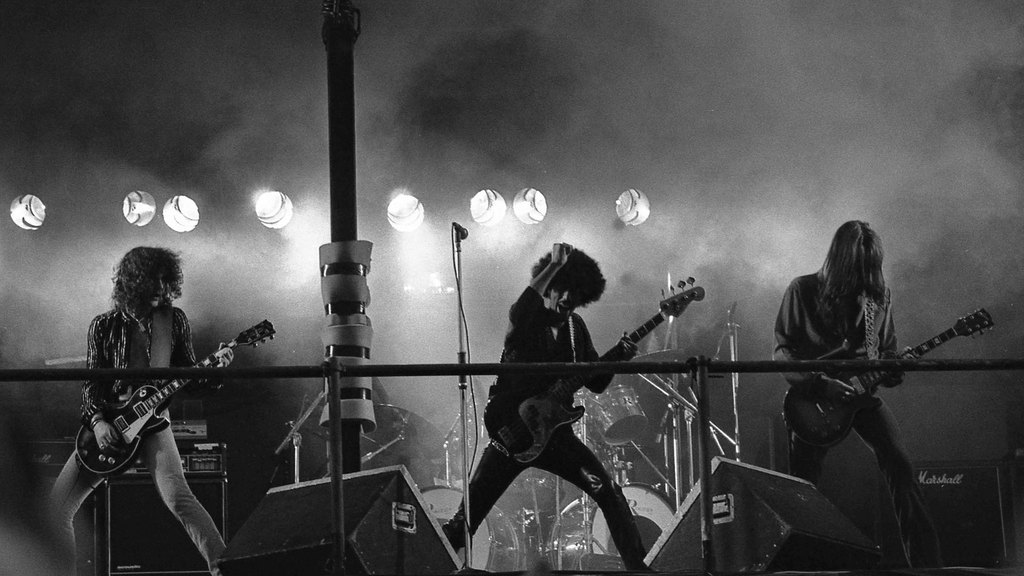
The History of the Riff: How Thin Lizzy Made "The Boys Are Back in Town" Sound Like a Victory Lap
Two guitarists, one deceptively simple progression, and a chorus built to make every barroom in the world feel like home.
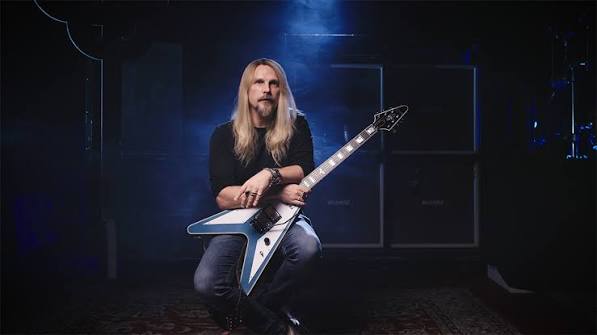
From Playing Hendrix for Coins to Judas Priest: Richie Faulkner Built His Entire Life Around Guitar
He learned Hendrix's "Wild Thing" as a kid, made his first money when a passer-by left 10 pence on the wall, and ended up standing in one of heavy metal's most scrutinised guitar positions. The interesting question isn't how Richie Faulkner joined Judas Priest — it's how he did it without becoming an impersonation.
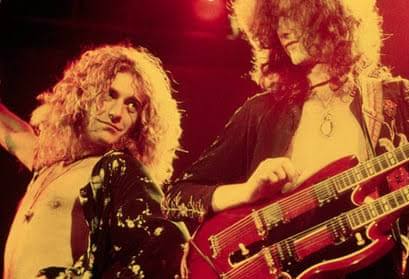
Robert Plant at 78: Why His Chemistry With Jimmy Page Was Led Zeppelin's Real Secret Weapon
Robert Plant turns 78 today. The conventional story says Page played guitar and Plant sang. The truth is stranger and more useful: they behaved like two lead instruments arguing, answering and leaving each other room.