Does Any Guitarist Really Need 27 Frets? Solar's New ACS Makes the Case
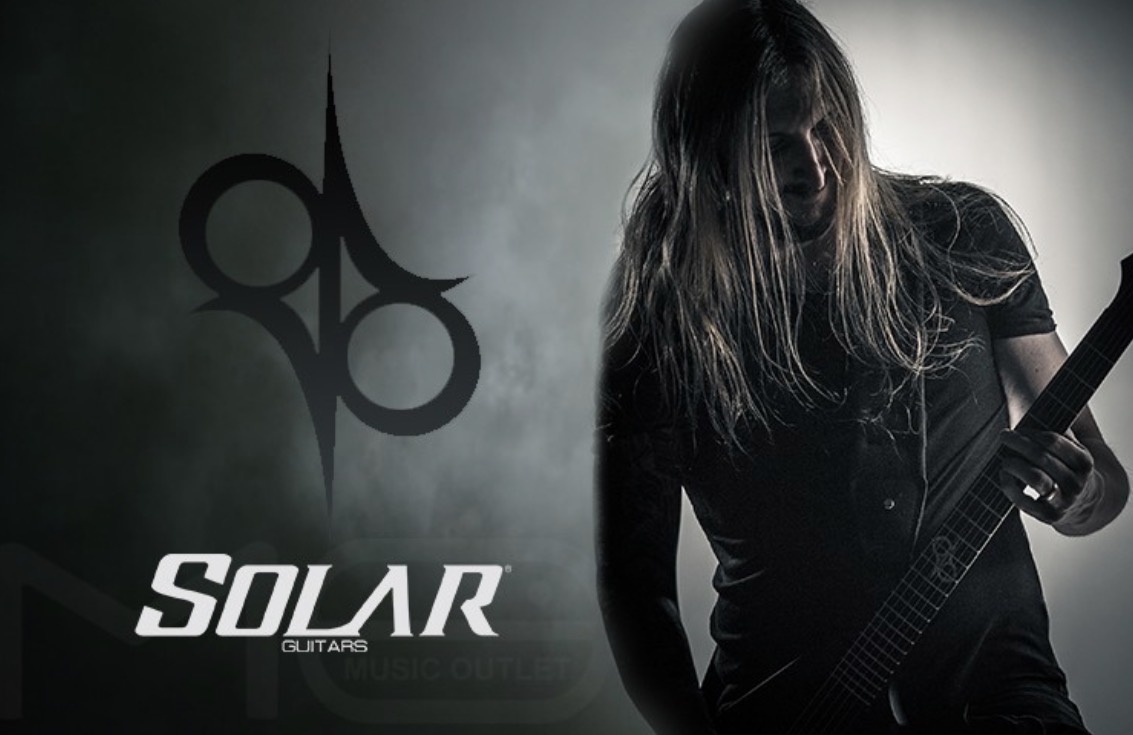
Solar Guitars has put 27 frets on its new carved-body ACS models — a six-string at 25.5" and a seven-string at 26.5", both with stainless super-jumbo frets, Gotoh 1996 tremolos and set-thru necks. Here are the verified specs, plus the design question nobody in the launch coverage is asking: what do frets 25, 26 and 27 actually give a player, and what do they cost you further down the neck?
Every few years a builder pushes the fingerboard a little further and the same argument restarts in the comments: nobody uses those frets. Solar Guitars has just given that argument a fresh subject. The company's new Type ACS models arrive with 27 frets — three more than the 24 that has been the effective ceiling for metal-oriented production guitars since the 1980s.
The interesting question is not whether you personally will ever play a note at the 27th fret. It is what a 27-fret fingerboard does to the rest of the instrument, because a fretboard extension is never a free addition. It moves things. It changes what sits where. And on an electric guitar, where something sits relative to the string's vibrating length is most of what determines how it sounds.
[TOC]
What Solar Has Actually Launched
Two models are confirmed on Solar's own storefront, and they are the only ACS instruments currently listed there. Everything in the table below comes from Solar's published specification tables — these are manufacturer specifications, not measurements we have taken.
ACS1.6FRW — six-string, White Gloss, US $1,299.00 (preorder)
Scale 25.5" · 27 stainless steel super-jumbo frets · ebony fingerboard, R350 radius · alder carved body, 45mm · three-piece maple neck, "C Solar" profile · set-thru joint · Gotoh 1996 Big Block recessed tremolo with noise-silencing springs · locking nut · Solar 18:1 locking tuners · Duncan Solar Dual Rail neck / Duncan Solar bridge, passive · one push-pull volume, one 500k tone, three-way toggle · Blacksmith 9–46 · made in Indonesia.
ACS1.7FRPS — seven-string, Pink Sparkle Gloss, US $1,399.00 (preorder)
Scale 26.5" · 27 stainless steel super-jumbo frets · ebony fingerboard, R400 radius · alder carved body, 45mm · three-piece maple neck, "C Solar" profile · set-thru joint · Gotoh 1996 Big Block recessed tremolo · locking nut · Solar 18:1 locking tuners · Solar 7-String Dual Rail neck / Duncan Solar bridge, passive · one push-pull volume, one 500k tone, three-way toggle · Blacksmith 9–62, B-standard · made in Indonesia.
Neither model is offered left-handed. Both are sold direct through Solar's international webstore; we found no separate regional pricing published at the time of writing.
A few things worth flagging before the analysis. Solar's Type AC line — the carved-body range the ACS grows out of — was introduced as the company's higher-end, contoured-top platform, as distinct from the flatter, slabbier bodies of its long-running Type A, S, V, E and T shapes. The ACS reads as that carved AC body with an extended 27-fret neck rather than an entirely new silhouette; Solar's own copy describes it as a carved body with "access scoops" and 27 frets. We could not find a verified, attributable statement from Ola Englund specifically about the ACS series, so there are no quotes from him here. Solar's marketing language about comfort and shred-ability is exactly that — marketing language, and we are not repeating it as fact.
We also could not verify any confirmed additional ACS models beyond these two. Treat talk of an expanded 2026 ACS lineup as unconfirmed until Solar lists it.
What Three Extra Frets Actually Give You
Start with the arithmetic, because it is smaller than the marketing implies.
On a standard-tuned six-string, the high E string tops out at E at the 24th fret — two octaves above the open string. Fret 25 gives you F, fret 26 F♯, and fret 27 G. That is a minor third of additional range on the top string. On the seven-string in B standard, the same three frets sit above the high E's two-octave point and behave identically.
So the honest framing of 27 frets is: a four-octave instrument on the top string, versus the three-octaves-and-a-major-seventh of a 22-fret guitar or the neat four-octaves-minus-nothing of a 24. A 21-fret vintage-style neck stops at C♯; a 22-fret neck at D; a 24-fret neck at E; a 27-fret neck at G. Each step is real, and each step is small.
Three extra frets is not a range problem being solved. It is a design trade being made — and the cost shows up under the neck pickup, not at the dusty end.
Is That Range Musically Useful?
In three specific contexts, yes, in a way that is easy to defend.
The first is position-based lead playing. The value of 24 frets was never mainly the top E — it was that the two-octave point lands on a fret, so scale shapes and pentatonic boxes repeat cleanly. Adding three more frets means the shape that starts at the 20th fret can be completed without running out of board. Players who think in boxes rather than in absolute pitch feel that before they ever notice the extra notes.
The second is tapping. Two-hand tapping and legato lines are the techniques most often forced to stop early, because the tapping hand needs room above the fretted note. An extra minor third of board is disproportionately useful there — the same reason the technique-driven end of the market has always pushed for more frets rather than the blues end. This is territory covered by players like Paul Gilbert and Guthrie Govan, where the top of the neck is a working area rather than a stunt zone.
The third is harmonised lead work and unison bends near the top of the range. Harmonising a line in thirds or fourths requires headroom above the melody note. On a 22-fret guitar, harmonies near the top of the neck collapse into bends; on a 27, they can be fretted.
Where the extra frets are much harder to justify is in ordinary rhythm playing, riff writing and vocal-register melody. Almost nothing in the recorded rock and metal canon lives above the 22nd fret, and the pieces that do tend to be either intentional showpieces or brief accents.
The Design Trade Nobody Mentions in a Launch Post
Here is the part that matters more than the note count, and it applies to any extended-fret guitar rather than specifically to these Solar models.
The Neck Pickup Has To Move
A fingerboard that runs to 27 frets occupies physical space on the body. The neck pickup has to go somewhere behind it, which means it sits closer to the bridge than it would on a 22- or 24-fret instrument.
That is a tonal change, not a cosmetic one. A pickup samples the string at one point along its length, and the harmonic content it sees depends on where that point falls relative to the string's nodes. A neck pickup on a 22-fret Strat-style guitar sits close to the 24th-fret harmonic node — the fat, vocal, round position that defines what players mean by "neck pickup tone." Push that pickup toward the bridge and it moves off that node: the fundamental weakens slightly, upper harmonics come up, and the sound gets tighter, clearer and less woolly.
Whether that is good or bad depends entirely on what you want. For high-gain lead playing, a slightly tighter neck pickup is often an advantage — it stays articulate under distortion instead of turning to mud. For clean jazz voicings or a Gilmour-style neck-pickup lead, it is a real loss. This is the same physics we walked through in humbuckers vs single-coils: position along the string is at least as decisive as the pickup's construction.
Solar's answer on both ACS models is a dual-rail neck unit rather than a conventional humbucker, which is a sensible design choice for a narrow, bridge-shifted slot — but we are describing the engineering logic, not claiming to know how it sounds. We have not heard either guitar.
Fret Spacing Gets Genuinely Tight
Fret spacing halves every octave, so the distance between frets 24 and 27 is small in absolute terms. On a 25.5" scale, the octave-and-a-half territory above the 24th fret is a matter of a few millimetres per fret. Super-jumbo fretwire — which both ACS models use — makes that even more of a design tension: taller, wider wire is easier to fret with light pressure, but it also consumes more of the available space between fret centres.
The practical consequence, on any 27-fret guitar, is that accuracy above the 24th fret depends more on the instrument's setup and the player's technique than on the design itself. That is also where the 26.5" scale of the seven-string helps a little: the longer scale spreads the upper frets slightly further apart than a 25.5" board does.
X Concepts Strings • Made in USA
Never Run Out of Strings Again.
Join the X Concepts String Club and get fresh USA-made strings delivered every month—plus Premium membership options for the full Guitar Plugged experience.
Upper-Fret Access Has To Be Engineered For
Frets you cannot reach are decoration. Getting a thumb and fretting hand into the top three frets requires a specific set of design decisions: a joint that does not block the hand, a carved or scooped heel, and enough cutaway depth to let the wrist rotate.
Solar's spec sheets list a set-thru joint with the company's access scoops, which is the category of construction usually chosen for this reason — it removes the square heel block of a bolt-on without the cost of full neck-through construction. Whether it works in the hand is a question only playing the guitar answers, and we have not. Any launch article telling you these guitars are comfortable up there is guessing.
“Three extra frets is not a range problem being solved. It is a design trade being made — and the cost shows up under the neck pickup, not at the dusty end.”
Scale Length, Tension and Intonation
Extra frets do not change scale length, and the two ACS models keep familiar numbers: 25.5" for the six, 26.5" for the seven. String tension at pitch is a function of scale, gauge and tuning, not fret count — a 27-fret guitar does not feel stiffer than a 24-fret one at the same scale and gauge.
Intonation is a different matter, and it gets harder rather than easier. Small errors in string height, fret levelling and saddle position compound as you go up the neck, because the same absolute error is a larger fraction of the remaining string length. A 27-fret instrument simply gives those errors three more frets in which to become audible. Anyone buying one should expect setup precision to matter more than it does on a 22-fret guitar — our guide to intonating a guitar covers why the top of the neck is where sloppy setups show up first, and the recessed Gotoh 1996 tremolo on both ACS models adds the usual floating-bridge considerations on top.
The Seven-String Case Is Stronger Than the Six
There is a reasonable argument that 27 frets makes more sense on the seven-string than on the six.
Extended-range players are already working across a wider pitch field and tend to treat the neck as a grid rather than a set of memorised blues positions. The high register on a seven-string also has to compete with a much heavier low end in a mix; being able to place a harmonised lead an extra minor third above the fray is a practical mixing tool, not just a technical flex. Modern progressive metal — the world of John Petrucci and Plini — is built on exactly that kind of registral separation.
Why 27-Fret Guitars Stay Rare
Solar did not invent the extended fingerboard, and this article is not going to pretend it did. Fingerboards beyond 24 frets have appeared on custom and boutique instruments for decades, and builders have offered extended-board options to order.
What we are not going to do is hand you a list of famous 27-fret production guitars, because when we went looking, most of the models people cite turned out not to qualify. Several instruments commonly named in forum threads carry a "27" in their model designation that refers to a 27-inch scale length, not a fret count — the Ibanez RG-series extended-scale models are the classic example, and they are 24-fret guitars. Others are custom-shop builds rather than catalogue items. Rather than pad this section with examples we cannot source, we will say the honest thing: verified, mass-produced 27-fret electrics are genuinely scarce, which is precisely why this launch is newsworthy.
The reasons they stay scarce are not mysterious:
- Demand is narrow. The number of players who will use frets 25 to 27 in a set is small, and manufacturers price tooling against volume.
- The pickup compromise is real. Every extra fret spends neck-pickup real estate, and most buyers value neck tone more than upper range.
- Build precision goes up. Levelling, crowning and intonating a board that tight is less forgiving, and fret-out at the top of the neck is an obvious defect.
- The 24-fret convention is deeply embedded. Scale shapes, thumb-tapping habits and the entire visual language of the modern metal guitar assume two octaves.
Who This Is Actually For
Technical lead players who already work above the 17th fret regularly and run out of board.
Progressive-metal and fusion players building harmonised or registrally separated lead parts.
Seven-string players who want top-end headroom above a heavy low register.
Tapping-focused guitarists, who gain the most per extra fret of anyone.
Studio players who occasionally need a note the rest of the rig cannot reach without an octave pedal.
Blues and classic-rock players, who live between frets 5 and 17 and rarely go past the 15th.
Vintage-style players, for whom a 21- or 22-fret neck and its neck-pickup placement are the point, not a limitation.
Anyone who prioritises a fat, traditional neck-pickup voice — this is the specific thing the design trades away.
Players whose repertoire simply does not go there. Three unused frets are not a fault; they are just weight and money you did not need to spend.
None of that is a criticism of the instrument. It is a description of a specialised tool. Solar builds for a metal-oriented audience — that has been the company's entire remit since Ola Englund launched it — and an extended-range, stainless-fretted, Floyd-adjacent carved-body guitar aimed at technical players is a coherent product for exactly that audience, not a novelty aimed at everyone.
What We Don't Know Yet
We have not played an ACS. Nobody at The Guitar Plugged has had one on a strap, plugged into anything, or checked how the upper frets feel with a real hand attached. So we are not telling you whether the access scoops work, whether the balance is right on a strap, whether the dual-rail neck pickup is any good, or whether the top three frets are usable in practice or a spec-sheet flourish.
Those are the only questions that ultimately decide whether 27 frets is a feature or a talking point, and they cannot be answered from a product page. If we get one in, we will tell you what we hear and publish the rig, the way we do in Tone Decoded.
The Bottom Line
27 frets is a small amount of extra range that costs a specific and predictable amount of neck-pickup character. For players who genuinely operate at the top of the neck — tappers, technical lead players, extended-range writers — that is a trade worth making, and the ACS pair puts it in a $1,299–$1,399 production instrument rather than a custom order, which is the actually notable part of this launch.
For everyone else, the honest answer to the headline is no. You do not need 27 frets. But "nobody needs it" has never been a useful test for guitar design; the 24-fret neck failed that test too, right up until it became standard.
Related Reading on The Guitar Plugged
Experience-driven coverage, not algorithm bait.
- 20+ years of guitar playing experience
- Real-world retail experience at Guitar Center
- Thousands of hours testing guitars, amps, and pedals
- A community of 50,000+ guitar enthusiasts across platforms
- Partnerships with Fender, DistroKid, TrueFire, Card Chords, and Enya
- Editorial standards published openly — see how we test gear
The Modern Guitar Magazine. Delivered to your inbox.
No spam. No gimmicks. Just great guitar content — stories, tones, iconic solos, and honest gear takes. Every week.
Ask GP
3 free questions a dayStill curious? Ask GP about this story.
Your personal classic-rock and guitar guide — ask anything about Does Any Guitarist Really Need.
Discussion (0)
Sign in to join the discussion.
Sign in to commentLoading comments…
Discover another guitar story
Swipe through our latest features, breaking news and iconic solos — one story at a time.
Open Swipe →More in Signature Gear
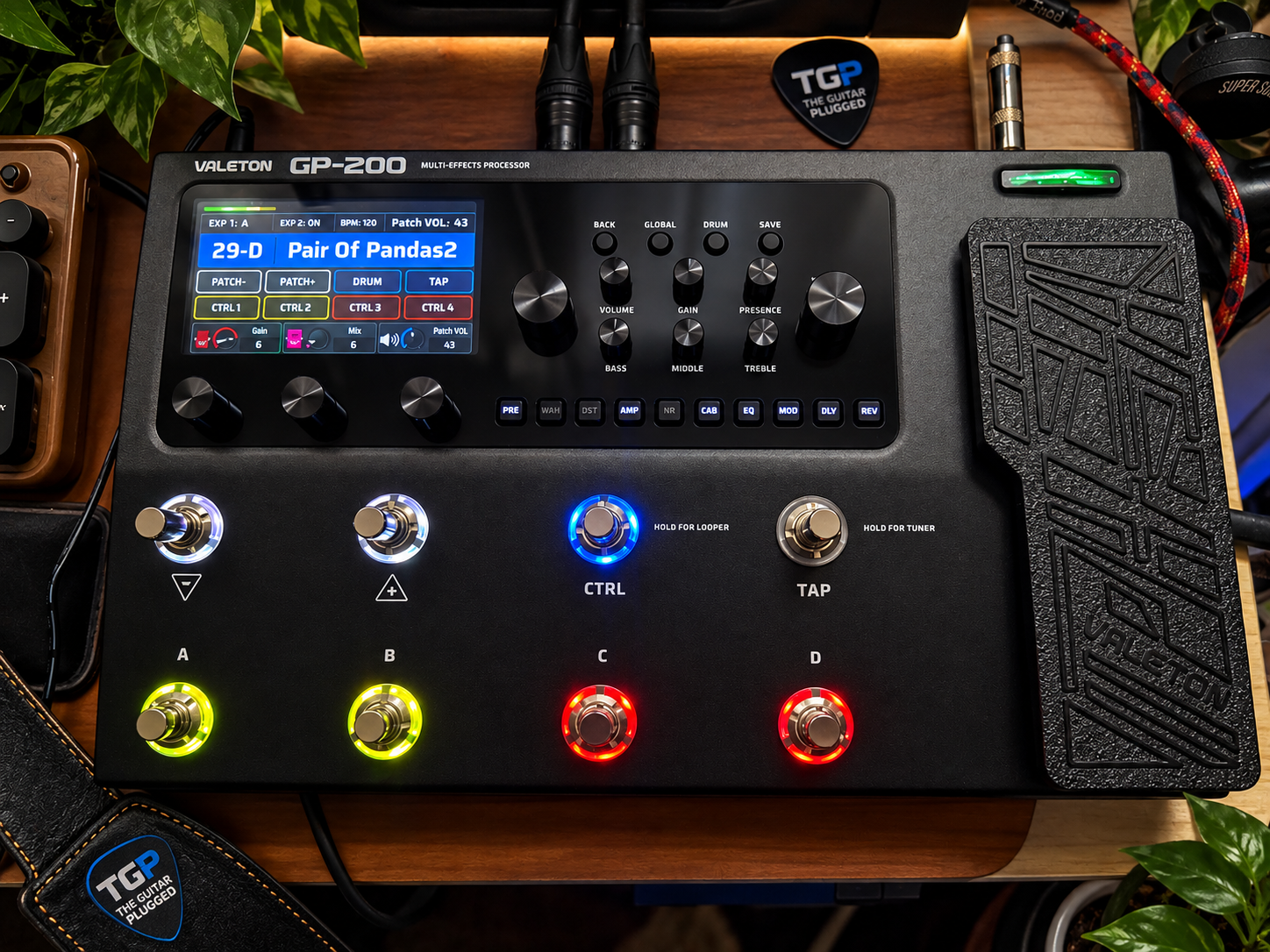
Valeton GP-200 Review: Is This the Budget Helix We’ve Been Waiting For?
Eight footswitches. Expression pedal. XLR outputs. MIDI. Effects loop. IR loading. More than 240 effects and 140-plus amp and cabinet models. The Valeton GP-200 looks suspiciously like the kind of rig that used to require considerably more money.

Marcus King’s First Guitar Comes Full Circle: Inside the New Epiphone El Dorado
The new Marcus King El Dorado isn’t simply another signature guitar. It recreates the Epiphone that helped start King’s musical life — and it might be one of the most interesting artist acoustics Epiphone has released in years.
Gibson Breaks a 70-Year Habit: The ELEV8 Is Its First Alnico 8 Humbucker
For seventy years Gibson humbuckers have run on Alnico 2, 3, 4 and 5. The new ELEV8 series finally reaches for Alnico 8 — and it is aimed squarely at high-gain players.